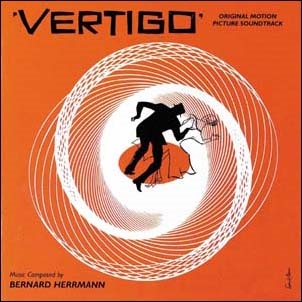
サウンドトラック
LPレコード

Vertigo

1.0

販売価格

¥
7,690
税込
還元ポイント

販売中

お取り寄せ
発送目安
14日~35日

お取り寄せの商品となります

入荷の見込みがないことが確認された場合や、ご注文後40日前後を経過しても入荷がない場合は、取り寄せ手配を終了し、この商品をキャンセルとさせていただきます。

フォーマット LPレコード
発売日 2019年03月22日
国内/輸入 輸入(アメリカ盤)
レーベルVarese Sarabande
構成数 1
パッケージ仕様 -
規格品番 VSD00029
SKU 888072073869

構成数 : 1枚
合計収録時間 : 00:00:00
Original scored composed by Bernard Herrmann, performed by Sinfonia of London, conducted by Muir Mathieson. Original score written by Bernard Herrmann. Another version of VERTIGO exists but is an older re-recording of these original session tapes. The music for VERTIGO just might be film composer Bernard Herrmann's best score. We're lucky to have this commercial soundtrack conducted by Muir Matheson who also conducted the music heard in Hitchcock's great film. While the sound could be probably stand some upgrade at some point, the music itself is clean, concise, and romantic in just the right doses. Herrmann utilizes his Tristan & Isolde-like leitmotifs with great skill; it's all quite Wagnerian without any of the Germanic baggage that most Hollywood composers bring to such borrowings. This music is as '50s modernist as Saul Bass's equally famous title sequences.

  1. 1.[LPレコード]

作品の情報

メイン
アーティスト: Bernard Herrmann

商品の紹介

Entertainment Weekly (10/12/01, p.30) - Ranked #16 in EW's "100 Best Movie Soundtracks" - "...A Rorschach blot of repressed pain and delirious release..."
Rovi

Herrmann develops longer melodies but employs his same variation and "cell" techniques in this score, one of his finest, played here by the Sinfonia of London and conducted by Muir Mathieson. The 1958 film opens on high energy drama, with a propulsive polytonal arpeggio (E flat minor over D minor) in triplets, one of the central motifs throughout (and recalling the opening of The Day The Earth Stood Still). As an amusing touch, when the credit "Directed by Alfred Hitchcock" appears, we hear a low, rotund D note on the tuba. The Rooftop cue opens with James Stewart, as plainclothes detective Scottie Ferguson, chasing a suspect across San Francisco rooftops. He slips, hangs onto a rain gutter, and we hear a wash of harp glissandos each time he looks at the distant ground (the "vertigo" cell). A lovely melody accompanies Scottie's first sight of Madeline, whom he is hired to tail. A soft pulse on a harp D note and quiet tango rhythm accompany Scottie's realization of how a portrait of Carlotta Valdes closely resembles Madeline. In the Farewell cue, the two drive to a Spanish mission that appears in Madeline's strange dream and we hear a mix of her theme, the Prelude and the Habenera. In The Tower cue, stabs from the brass and winds are mixed with rushing arpeggios and harp glissandos. Through a window, Scottie sees Madeline appear to fall to her death. The Nightmare is a more abstracted version of the Habenera. Upon The Return to the mission, the "vertigo" glissandos are heard interspersed with polytonal chords in the brass, and, in the Finale, poetic justice occurs to concluding brass chords as Scottie stares at his dead love on the ground below.
Rovi

This album (which re-appeared in the late '70s on the Mercury "Gold" line, and later on CD) was, at one time, the best extant version that one could purchase of one of the finest film scores ever written; but life and decisions have since gotten much richer and more complicated for film music enthusiasts. In the 1990s, the score was first re-recorded in full by the Royal Scottish National Orchestra under conductor Joel McNeely, and then, a little after that, the original scoring tracks from the movie itself were retrieved, restored, and released commercially, which reduced the significance of this album, without rendering it quite obsolete. As to the music itself, Vertigo was one of best works by Bernard Herrmann, composer for the 1958 Alfred Hitchcock film, and one of his most beautiful and disturbing film scores. He developed longer melodies than usual but employs many of the same variation and motif-mixing techniques that he had previously used, and the result -- listening to just the music, or taking it in as an element of the movie -- is something midway between a symphony and an opera, in terms of the impact on the listener. The work opens in high-energy drama with a propulsive polytonal arpeggio (E flat minor over D minor) in triplets that is one of the central motifs throughout the score (this also recalls the opening of Herrmann's score for The Day the Earth Stood Still, written at the other end of the decade). As an amusing touch, when the credit "Directed by Alfred Hitchcock" appears on the screen, you hear a low rotund D note on the tuba. From that start, you get the musical depiction of violent physical action, sudden death, and the fear motif associated with James Stewart's character that will be central to rest of the plot and the denouement. Along with a bizarrely scored and orchestrated Spanish-themed section, associated with the supposed psychosis of the woman that Stewart's character has been hired to protect (from herself), you get a love theme that has been compared to Wagner's Liebestod from Tristan und Isold in impact and intensity. The score was too complex and challenging to earn any honors from the Hollywood of the late '50s, but it did earn a commercial soundtrack release, the first music associated with a Hitchcock movie so honored. What makes this very complicated for collectors and fans coming in since the mid-'90s is the plethora of Vertigo soundtracks, and the fact that Herrmann didn't conduct them, for the album or for the film itself. It was intended that, as with his other scores, he would do so, in Los Angeles, but a musicians' strike precluded this. Instead, arrangements were made for the score for the movie to be recorded in London under conductor Muir Mathieson, an old film music hand whose work in the field went back to the 1930s. And this was being done when the British musicians' union decided to support their colleagues across the ocean, and so parts of the score then had to be recorded in Vienna, as well, and the latter were in mono, as opposed to the stereo sound on the London-recorded tracks. Finally, when it came time to prepare a commercial soundtrack release, Mathieson was back in England and cut those tracks, 34 minutes' worth of music, with the Sinfonia of London, comprising this album. Those seeking Herrmann's own conducting on the Vertigo music, incidentally, will have to look to the suite that he prepared and recorded on the 1969 album now known as Music from the Great Hitchcock Movie Thrillers. ~ Bruce Eder
Rovi

メンバーズレビュー

1件のレビューがあります
1.0
0%
0%
0%
0%
100%
高額ですがレコードの品質が悪いです。
カッティングレベルが低く、溝も浅いので、スクラッチノイズはあきらめるしかありません。
曲数の多いCDの方をお勧めします。
0

読み込み中にエラーが発生しました。

画面をリロードして、再読み込みしてください。