Rock/Pop
CDアルバム
Various Artists

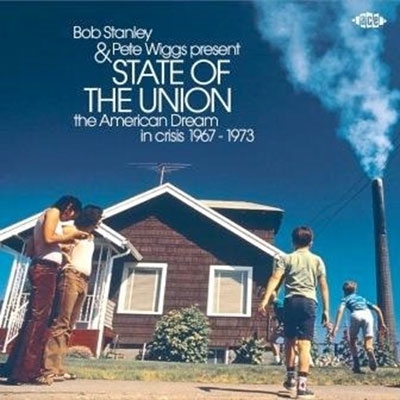
Bob Stanley & Pete Wiggs Present State of The Union

0.0

販売価格

¥
2,690
税込
還元ポイント

販売中

お取り寄せ
発送目安
14日~35日

お取り寄せの商品となります

入荷の見込みがないことが確認された場合や、ご注文後40日前後を経過しても入荷がない場合は、取り寄せ手配を終了し、この商品をキャンセルとさせていただきます。

フォーマット CDアルバム
発売日 2018年11月02日
国内/輸入 輸入
レーベルAce
構成数 1
パッケージ仕様 -
規格品番 ACI70923262
SKU 029667092326

構成数 : 1枚
合計収録時間 : 01:18:45
Liner Note Author: Bob Stanley . Recording information: 1971. Photographer: Gene Daniels. Pay attention to the subtitle of Bob Stanley & Pete Wiggs Present State of the Union: The American Dream in Crisis 1967-1973. That phrase hints at the turmoil in the United States as the Summer of Love rolled into a violent, turbulent 1968 and the country as a whole began to take stock of Vietnam, the Civil Rights Movement, and the legacy of the hippie dream. Stanley and Wiggs document this shift by focusing on establishment artists reckoning with all of these changes, usually with the assistance of strings and warped echoes of psychedelia. What makes State of the Union such a compelling listen -- and important historical document -- is that the 24 featured artists are divided between accidental tourists, pandering pop stars, and genuine works of art. Often, the line separating these divisions is a little blurry, particularly on Roy Orbison's melodramatic epic "Southbound Jericho Parkway," a winding mini-suite whose darkness pales in comparison to the Everly Brothers' genuinely unsettling "Lord of the Manor." Such extreme swings in tone and style are smoothed over by the fact that all of these selections are big-budget productions, bearing layers of orchestration, studio players, and backing vocals; even when the subject is uneasy, it's music for the easy listening market. What's astonishing about State of the Union is how it reveals that these adult-oriented songs could be as spacy as the underground -- or, failing that, they offer their own mind-altering trip, such as Bing Crosby pondering a post-space age future on "What Do We Do with the World?" Individually, some of the selections could be classified as camp -- this is especially true of covers of pop hits, such as Mel Torme's version of R.B. Greaves' "Take a Letter Maria" and the Brothers Four's sweet, soft take on the Beatles' "Revolution" -- but when presented as a whole, they amount to a prime piece of pop archaeology. ~ Stephen Thomas Erlewine

  1. 1.[CDアルバム]
    1. 1.
      Clean Up Your Own Back Yard / Elvis Presley
    2. 2.
      Brand New Day / Della Reese
    3. 3.
      Abraham, Martin and John / Dion
    4. 4.
      The Train / Frank Sinatra
    5. 5.
      Saturday's Father / The Four Seasons
    6. 6.
      4th of July / The Beach Boys
    7. 7.
      Wine in the Wind / The Anita Kerr Singers
    8. 8.
      What Do We Do With the World? / Bing Crosby
    9. 9.
      Lord of the Manor / The Everly Brothers
    10. 10.
      Hitchhiker / The Four Preps
    11. 11.
      Paint America Love / Lou Christie
    12. 12.
      Mr Businessman / Ray Stevens
    13. 13.
      Paint Me Black Angels (Angelitos Negros) / Eartha Kitt
    14. 14.
      Southbound Jericho Parkway / Roy Orbison
    15. 15.
      Questions / Bobby Darin
    16. 16.
      This Crazy World / Paul Anka
    17. 17.
      Take a Letter Maria / Mel Torme
    18. 18.
      Cherrystones / Eugene McDaniels
    19. 19.
      Some People Sleep / The Tokens
    20. 20.
      Cardboard California / Buddy Greco
    21. 21.
      Do You Believe This Town / Dean Martin
    22. 22.
      Welfare Hero / Johnny Tillotson
    23. 23.
      Save the Children / Teresa Brewer
    24. 24.
      Revolution / The Brothers Four

作品の情報

オリジナル発売日:2018年

商品の紹介

Pay attention to the subtitle of Bob Stanley & Pete Wiggs Present State of the Union: The American Dream in Crisis 1967-1973. That phrase hints at the turmoil in the United States as the Summer of Love rolled into a violent, turbulent 1968 and the country as a whole began to take stock of Vietnam, the Civil Rights Movement, and the legacy of the hippie dream. Stanley and Wiggs document this shift by focusing on establishment artists reckoning with all of these changes, usually with the assistance of strings and warped echoes of psychedelia. What makes State of the Union such a compelling listen -- and important historical document -- is that the 24 featured artists are divided between accidental tourists, pandering pop stars, and genuine works of art. Often, the line separating these divisions is a little blurry, particularly on Roy Orbison's melodramatic epic "Southbound Jericho Parkway," a winding mini-suite whose darkness pales in comparison to the Everly Brothers' genuinely unsettling "Lord of the Manor." Such extreme swings in tone and style are smoothed over by the fact that all of these selections are big-budget productions, bearing layers of orchestration, studio players, and backing vocals; even when the subject is uneasy, it's music for the easy listening market. What's astonishing about State of the Union is how it reveals that these adult-oriented songs could be as spacy as the underground -- or, failing that, they offer their own mind-altering trip, such as Bing Crosby pondering a post-space age future on "What Do We Do with the World?" Individually, some of the selections could be classified as camp -- this is especially true of covers of pop hits, such as Mel Torme's version of R.B. Greaves' "Take a Letter Maria" and the Brothers Four's sweet, soft take on the Beatles' "Revolution" -- but when presented as a whole, they amount to a prime piece of pop archaeology. ~ Stephen Thomas Erlewine|
Rovi

Pay attention to the subtitle of Bob Stanley & Pete Wiggs Present State of the Union: The American Dream in Crisis 1967-1973. That phrase hints at the turmoil in the United States as the Summer of Love rolled into a violent, turbulent 1968 and the country as a whole began to take stock of Vietnam, the Civil Rights Movement, and the legacy of the hippie dream. Stanley and Wiggs document this shift by focusing on establishment artists reckoning with all of these changes, usually with the assistance of strings and warped echoes of psychedelia. What makes State of the Union such a compelling listen -- and important historical document -- is that the 24 featured artists are divided between accidental tourists, pandering pop stars, and genuine works of art. Often, the line separating these divisions is a little blurry, particularly on Roy Orbison's melodramatic epic "Southbound Jericho Parkway," a winding mini-suite whose darkness pales in comparison to the Everly Brothers' genuinely unsettling "Lord of the Manor." Such extreme swings in tone and style are smoothed over by the fact that all of these selections are big-budget productions, bearing layers of orchestration, studio players, and backing vocals; even when the subject is uneasy, it's music for the easy listening market. What's astonishing about State of the Union is how it reveals that these adult-oriented songs could be as spacy as the underground -- or, failing that, they offer their own mind-altering trip, such as Bing Crosby pondering a post-space age future on "What Do We Do with the World?" Individually, some of the selections could be classified as camp -- this is especially true of covers of pop hits, such as Mel Torme's version of R.B. Greaves' "Take a Letter Maria" and the Brothers Four's sweet, soft take on the Beatles' "Revolution" -- but when presented as a whole, they amount to a prime piece of pop archaeology. ~ Stephen Thomas Erlewine
Rovi

メンバーズレビュー

レビューを書いてみませんか?

読み込み中にエラーが発生しました。

画面をリロードして、再読み込みしてください。