Rock/Pop
CDアルバム

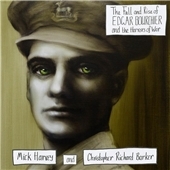
The Fall and Rise of Edgar Bourchier and the Horrors of War

0.0

販売価格

¥
3,190
税込
還元ポイント

廃盤

在庫状況 について

フォーマット CDアルバム
発売日 2018年11月09日
国内/輸入 輸入
レーベルMute
構成数 1
パッケージ仕様 -
規格品番 391H817020
SKU 5413356000252

構成数 : 1枚
合計収録時間 : 00:00:00
Mick Harvey is no stranger to concept albums. He's released three volumes of gorgeously interpreted and arranged songs by Serge Gainsbourg, a collection of love songs, and an extended reflective meditation on mortality inspired by the passing of his friends. That said, this collaborative effort with author and poet Christopher Richard Barker is the most far reaching and patiently executed of all. Barker brought Harvey the idea of a series of poems he'd written as "Edgar Bourchier," a fictional poet and WWI soldier who penned his works from the front lines, where he perished at the age of 24 after being run over by a tank. Barker's canny, deeply detailed narrative -- reproduced in the liner essay -- weaves fact and fiction, dropping the actual names of publishers, actual poets, and an equally fictitious composer who inspired Harvey to develop demos and eventually write songs. A website Barker runs reveals the truth, but the album remains steeped in mystery. Harvey, as is his M.O. works with a small group of collaborators who include longtime musical partner J.P. Shilo, bassist Phil Kakulas, and vocalists Alain Johannes, Simon Breed, and Jade Imagine, as well as Barker.
Harvey traces musical roots from Anglo and French popular song traditions to garage rock to Australian country and saloon music, as well as loosely defined experimentalism in 15 selections. Opener "Further Down the Line" weaves 20th century balladry, folk songs, electric guitars, organ, and a string chart behind Harvey's baritone vocal delivering Barker's searing lyrics. "The Kindness of Ravens" is a dramatic folk ballad with the poignancy, profundity, and drama of a Leonard Cohen tune. The hinge track is also the set's longest in " The Lost Bastard Son of War," with his own sung and Barker's hysteria-laced spoken vocals atop a screaming, lo-fi, distorted garage rocker with machine-gun sounds underscoring every punk snarl. "I Am the Messenger" is comprised of bass drones, strings, and keyboards accompanying a sinister-sounding poem in a more or less experimental structure. "The Eternal Black Darkness of My Death" is a funeral dirge-ish acoustic tune that could easily have been recorded by one of Harvey's earlier bands, Crime and the City Solution, while closer "Corpse 564" is allegedly a cover of a poem penned by Bourchier that was first recorded by a post-punk band called the Moon Lepers in 1989. All of this would be woeful if it weren't for Harvey, who took Barker's convincing concept seriously; he crafted a series of truly brilliant songs that equate with his best material. The Fall and Rise of Edgar Bourchier and the Horrors of War is a work of profoundly disturbing imagination that simultaneously reflects seemingly never-ending violence, the weight of history, and the art of poetry itself. ~ Thom Jurek

  1. 1.[CDアルバム]
    1. 1.
      Further Down the Line - Harvey, Mick
    2. 2.
      The Poetic Clown - Harvey, Mick
    3. 3.
      A Secret Hidden Message - Harvey, Mick
    4. 4.
      Poor Poor Surgeon Tim - Harvey, Mick
    5. 5.
      The Kindness of Ravens - Harvey, Mick
    6. 6.
      Softly Spoken Bill - Harvey, Mick
    7. 7.
      Pounding for Peace - Harvey, Mick
    8. 8.
      The Lost Bastard Son of War - Harvey, Mick
    9. 9.
      The Expressionist Tell, Pt. 1 - Harvey, Mick
    10. 10.
      The Expressionist Tell, Pt. 2 - Harvey, Mick
    11. 11.
      I Am the Messenger - Harvey, Mick
    12. 12.
      The Eternal Black Darkness of My Death - Harvey, Mick
    13. 13.
      The Darkling Fields of Stowborough - Harvey, Mick
    14. 14.
      Listen in the Twilight Breeze - Harvey, Mick
    15. 15.
      Corpse 564 - Harvey, Mick

作品の情報

メイン
アーティスト: Mick HarveyChristopher Richard Barker

商品の紹介

Mick Harvey is no stranger to concept albums. He's released three volumes of gorgeously interpreted and arranged songs by Serge Gainsbourg, a collection of love songs, and an extended reflective meditation on mortality inspired by the passing of his friends. That said, this collaborative effort with author and poet Christopher Richard Barker is the most far reaching and patiently executed of all. Barker brought Harvey the idea of a series of poems he'd written as "Edgar Bourchier," a fictional poet and WWI soldier who penned his works from the front lines, where he perished at the age of 24 after being run over by a tank. Barker's canny, deeply detailed narrative -- reproduced in the liner essay -- weaves fact and fiction, dropping the actual names of publishers, actual poets, and an equally fictitious composer who inspired Harvey to develop demos and eventually write songs. A website Barker runs reveals the truth, but the album remains steeped in mystery. Harvey, as is his M.O. works with a small group of collaborators who include longtime musical partner J.P. Shilo, bassist Phil Kakulas, and vocalists Alain Johannes, Simon Breed, and Jade Imagine, as well as Barker.
Harvey traces musical roots from Anglo and French popular song traditions to garage rock to Australian country and saloon music, as well as loosely defined experimentalism in 15 selections. Opener "Further Down the Line" weaves 20th century balladry, folk songs, electric guitars, organ, and a string chart behind Harvey's baritone vocal delivering Barker's searing lyrics. "The Kindness of Ravens" is a dramatic folk ballad with the poignancy, profundity, and drama of a Leonard Cohen tune. The hinge track is also the set's longest in " The Lost Bastard Son of War," with his own sung and Barker's hysteria-laced spoken vocals atop a screaming, lo-fi, distorted garage rocker with machine-gun sounds underscoring every punk snarl. "I Am the Messenger" is comprised of bass drones, strings, and keyboards accompanying a sinister-sounding poem in a more or less experimental structure. "The Eternal Black Darkness of My Death" is a funeral dirge-ish acoustic tune that could easily have been recorded by one of Harvey's earlier bands, Crime and the City Solution, while closer "Corpse 564" is allegedly a cover of a poem penned by Bourchier that was first recorded by a post-punk band called the Moon Lepers in 1989. All of this would be woeful if it weren't for Harvey, who took Barker's convincing concept seriously; he crafted a series of truly brilliant songs that equate with his best material. The Fall and Rise of Edgar Bourchier and the Horrors of War is a work of profoundly disturbing imagination that simultaneously reflects seemingly never-ending violence, the weight of history, and the art of poetry itself. ~ Thom Jurek|
Rovi

メンバーズレビュー

レビューを書いてみませんか?

読み込み中にエラーが発生しました。

画面をリロードして、再読み込みしてください。