Country/Blues
CDアルバム

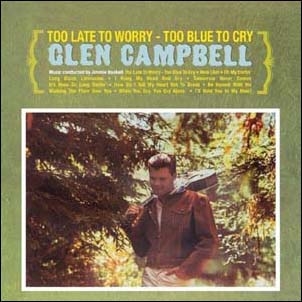
Too Late To Worry, Too Blue To Cry

0.0

販売価格

¥
2,290
税込
ポイント20%還元

廃盤

在庫状況 について

フォーマット CDアルバム
発売日 2018年06月22日
国内/輸入 輸入(イギリス盤)
レーベルGreyscale
構成数 1
パッケージ仕様 -
規格品番 GSGZ119CD
SKU 5056083201532

構成数 : 1枚
合計収録時間 : 00:00:00
This album coincided with Glen Campbell's transition out of instrumental/novelty country recording and into country-pop -- side one ends with the title track, a song that Al Dexter had a hit with in the 1940s and which Campbell grew up with, which was also Campbell's first single on Capitol Records. And the long-player opens with his rendition of the Ernest Tubb classic "Walking the Floor Over You," retooled by arranger/conductor Jimmy Haskell in terms that better play up Campbell's vocalizing. There are a couple of Campbell copyrights with Jerry Capehart represented -- including the soaring "How Do I Tell My Heart Not to Break," one of Campbell's best vocal performances of this period -- but much of the album focuses on his interpretations of songs associated with Johnny Bond, Gene Autry, et. al. It's all thoroughly easy to absorb country-pop, exquisitely played and featuring lush backing choruses in the best Nashville sound tradition of the time. This was still a long way from the sound with which Campbell would dominate the pop charts in the later '60s, but it began the process of turning him into a popular singer, while retaining some of his prodigious virtuosity. ~ Bruce Eder

  1. 1.[CDアルバム]
    1. 1.
      Walking the Floor Over You
    2. 2.
      I'll Hold You in My Heart
    3. 3.
      Be Honest With Me
    4. 4.
      Oh My Darlin'
    5. 5.
      Tomorrow Never Comes
    6. 6.
      Too Late to Worry - Too Blue to Cry
    7. 7.
      Here I Am
    8. 8.
      I Hang My Head and Cry
    9. 9.
      When You Cry, You Cry Alone
    10. 10.
      How Do I Tell My Heart Not to Break?
    11. 11.
      It's Been So Long Darlin'
    12. 12.
      Long Black Limousine

作品の情報

メイン
アーティスト: Glen Campbell

オリジナル発売日:1963年

商品の紹介

This album coincided with Glen Campbell's transition out of instrumental/novelty country recording and into country-pop -- side one ends with the title track, a song that Al Dexter had a hit with in the 1940s and which Campbell grew up with, which was also Campbell's first single on Capitol Records. And the long-player opens with his rendition of the Ernest Tubb classic "Walking the Floor Over You," retooled by arranger/conductor Jimmy Haskell in terms that better play up Campbell's vocalizing. There are a couple of Campbell copyrights with Jerry Capehart represented -- including the soaring "How Do I Tell My Heart Not to Break," one of Campbell's best vocal performances of this period -- but much of the album focuses on his interpretations of songs associated with Johnny Bond, Gene Autry, et. al. It's all thoroughly easy to absorb country-pop, exquisitely played and featuring lush backing choruses in the best Nashville sound tradition of the time. This was still a long way from the sound with which Campbell would dominate the pop charts in the later '60s, but it began the process of turning him into a popular singer, while retaining some of his prodigious virtuosity. ~ Bruce Eder|
Rovi

This album coincided with Glen Campbell's transition out of instrumental/novelty country recording and into country-pop -- side one ends with the title track, a song that Al Dexter had a hit with in the 1940s and which Campbell grew up with, which was also Campbell's first single on Capitol Records. And the long-player opens with his rendition of the Ernest Tubb classic "Walking the Floor Over You," retooled by arranger/conductor Jimmy Haskell in terms that better play up Campbell's vocalizing. There are a couple of Campbell copyrights with Jerry Capehart represented -- including the soaring "How Do I Tell My Heart Not to Break," one of Campbell's best vocal performances of this period -- but much of the album focuses on his interpretations of songs associated with Johnny Bond, Gene Autry, et. al. It's all thoroughly easy to absorb country-pop, exquisitely played and featuring lush backing choruses in the best Nashville sound tradition of the time. This was still a long way from the sound with which Campbell would dominate the pop charts in the later '60s, but it began the process of turning him into a popular singer, while retaining some of his prodigious virtuosity. ~ Bruce Eder
Rovi

メンバーズレビュー

レビューを書いてみませんか?

読み込み中にエラーが発生しました。

画面をリロードして、再読み込みしてください。