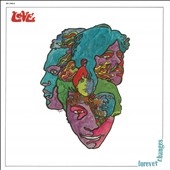
鮮烈で独創的なスタイルで、60年代L.A.の先端を駆け抜けたサイケ/フォーク・ロック・バンド、ラヴ。 彼らの代表作であり、ロック史に残る名盤として広く知られているサード・アルバム『FOREVER CHANGES』が発売50周年を記念して、新リマスター音源の4CD+1DVD+1LPの豪華アニヴァーサリー・エディションで登場!
発売・販売元 提供資料(2018/02/26)
Rolling Stone (12/11/03, p.108) - Ranked #40 in Rolling Stone's "500 Greatest Albums Of All Time" - "...Love were Lee's vehicle for a pioneering folk-rock - paranoid, punky, like the Byrds morphing into the Doors..."
Q (8/99) - Included in Q Magazine's "Best Psychedelic Albums of All Time" issue.
Q (8/99, p.138) - "...whenever lists are compiled for greatest album of all time, FOREVER CHANGES has its advocates....exquisite tunes...a rather elaborate Summer of Love chamber piece..."
Q (8/99) - Included in Q Magazine's "Best Psychedelic Albums of All Time."
Q (8/99, p.138) - "...whenever lists are compiled for greatest album of all time, FOREVER CHANGES has its advocates....exquisite tunes...a rather elaborate Summer of Love chamber piece..."
Uncut (p.99) - 5 stars out of 5 -- "A suite of songs as seductive as honey-traps, with such powerful psychological associations of sunshine that they almost warm the skin on your arms..."
Q (Magazine) (p.157) - 4 stars out of 5 -- "No self-respecting record collector should be without a copy..."
Mojo (Publisher) (p.78) - "FOREVER CHANGES is Love's masterwork....David Angel's spellbinding orchestral arrangements are certainly key in establishing it as a transcendent album."
Mojo (Publisher) (1/02, p.69) - Included in Mojo's "Best Reissues of 2001".
Mojo (Publisher) (3/01, p.89) - "...'The' key '60s album....Totally suffused in acid: being full of bizarre juxtapositions, perceptual tricks, multiple viewpoint lyrics, lightning fast, almost schizoid changes of mood and topic, the personal fusing with the universal..."
NME (Magazine) (10/2/93, p.29) - Ranked #18 in NME's list of the `Greatest Albums Of All Time.'
NME (Magazine) (2/17/01, p.45) - 10 out of 10 - "...An album of awesome intensity and tenderness....baroque and beautiful folk-rock the like of which had never been heard before - nore been bettered since..."
NME (Magazine) (10/2/93, p.29) - Ranked #18 in NME's list of the "Greatest Albums Of All Time."
NME (Magazine) (2/17/01, p.45) - 10 out of 10 - "...An album of awesome intensity and tenderness....baroque and beautiful folk-rock the like of which had never been heard before - nor been bettered since..."
Blender (Magazine) (p.81) - 4 stars out of 5 -- "[A] font for artists from beck to Thom Yorke, lovers of knotty pop, and doubters of pop-culture euphoria."
Paste (magazine) (p.79) - "FOREVER CHANGES is a haunted record, from its fragile vocals to the deathly premonitions that loomed over frontman Arthur Lee throughout its recording process....The original album itself is incredible."
Record Collector (magazine) (p.91) - 4 stars out of 5 -- "It's an unparalleled combination of a dexterous melodic wit, ambitious arrangements that have bewitched generations and a lyrical vision veering between the unsettling and sensitive."
Rovi
Love's Forever Changes made only a minor dent on the charts when it was first released in 1967, but years later it became recognized as one of the finest and most haunting albums to come out of the Summer of Love, which doubtless has as much to do with the disc's themes and tone as the music, beautiful as it is. Sharp electric guitars dominated most of Love's first two albums, and they make occasional appearances here on tunes like "A House Is Not a Motel" and "Live and Let Live," but most of Forever Changes is built around interwoven acoustic guitar textures and subtle orchestrations, with strings and horns both reinforcing and punctuating the melodies. The punky edge of Love's early work gave way to a more gentle, contemplative, and organic sound on Forever Changes, but while Arthur Lee and Bryan MacLean wrote some of their most enduring songs for the album, the lovely melodies and inspired arrangements can't disguise an air of malaise that permeates the sessions. A certain amount of this reflects the angst of a group undergoing some severe internal strife, but Forever Changes is also an album that heralds the last days of a golden age and anticipates the growing ugliness that would dominate the counterculture in 1968 and 1969; images of violence and war haunt "A House Is Not a Motel," the street scenes of "Maybe the People Would Be the Times or Between Clark and Hillsdale" reflects a jaded mindset that flower power could not ease, the twin specters of race and international strife rise to the surface of "The Red Telephone," romance becomes cynicism in "Bummer in the Summer," the promise of the psychedelic experience decays into hard drug abuse in "Live and Let Live," and even gentle numbers like "Andmoreagain" and "Old Man" sound elegiac, as if the ghosts of Chicago and Altamont were visible over the horizon as Love looked back to brief moments of warmth. Forever Changes is inarguably Love's masterpiece and an album of enduring beauty, but it's also one of the few major works of its era that saw the dark clouds looming on the cultural horizon, and the result was music that was as prescient as it was compelling. ~ Mark Deming
Rovi