オンラインキャンペーン価格クラシック スペシャルプライス15%オフ
クラシック
CDアルバム

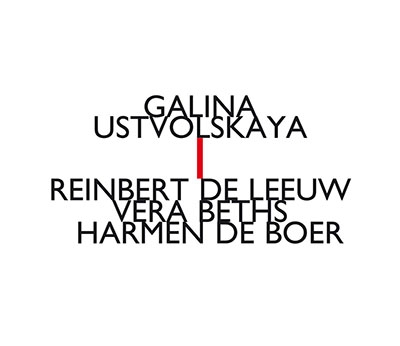
Galina Ustvolskaya I - Trio, Piano Sonata No.5, Duet

0.0

販売価格

¥
2,690
税込

¥ 404 (15%)オフ

¥
2,286
税込
還元ポイント

販売中

在庫わずか
発送目安
当日~翌日

在庫状況 について

・各種前払い決済は、お支払い確認後の発送となります(Q&A)

フォーマット CDアルバム
発売日 2018年01月13日
国内/輸入 輸入
レーベルHat Art
構成数 1
パッケージ仕様 -
規格品番 HATART194
SKU 4589538730864

構成数 : 1枚
合計収録時間 : 00:58:40
Liner Note Author: Art Lange. Recording information: De Vereeniging, Nijmegen (10/05/1991/10/06/1991). Given how rare they've been, any recording of the work of Russian composer Galina Ustvolskaya -- whom Shostakovich himself would consult on each of the works he composed during her tenure as his student (and incorporated a theme from her "Trio" for clarinet, violin, and piano, included here) -- would be welcome. That a collection should be this exquisitely compiled and performed is a gift from the heavens. Ustvolskaya's name is only now being uttered outside her native Russia and Eastern Europe (she was born in 1919). She was raised between the heady experimentalism of the October Revolution and the rise of Russia's own cultural revolution, Soviet Realism. Her work sat in obscurity in her native country, often unperformed or even printed; tied and tangled in the stinking garbage heap of ideological conflict, i.e., censorship. Her vision as a composer is austere, spiritual, and often bleak. She paints her scores in shades of grays and browns, not unlike the more subtle of Mark Rothko's canvasses. Her lack of sentimentality doesn't, however, result in a lack of heart, as these works will attest. The collection opens with "Trio" for violin, piano and clarinet from 1949. And here is the first astonishing fact: this music dating back 43 years already predicted the aftermath of serialism and is unconstrained by its bonds -- in fact, by any boundaries at all. While it's true that Ustvolskaya was reared in a musical culture where such music was regarded as decadent is of no consequence, this music sounds ahead of its time, even today. The lilting piano sets its tone in a somber, almost elegiac tone, and is sweetened only slightly by a violin playing counterpoint to DeBoer's clarinet. It is constructed of three strange movements-- espressivo, dolce, energico -- and one can hear Shostakovich's influence in the last. There is tenderness here, but no emotion is allowed that is not contained within the sweetness of a somber, fluid harmonic architecture that echoes regret and loss. "Sonata No. 5 in 10 Movements," from 1989, stands in sharp contrast with its sheer physicality. Tension builds in fours and eights until it becomes almost unbearable. This is so not only for the listener, who is bombarded with a kind of dark dissonance that has its roots in not only sorrow but fear also. And for the instrument itself, which threatens to collapse under the weight of the composition and its performance combined. The duet for violin and piano, written in 1964 holds the middle ground not only chronologically, but musically as well. Here, from spare, even sparse beginnings, is created a kind of spiritual mourning, for not only that lack which is felt in places unmentionable, but also for that which never was. And while it's true the piano is attacked with some ferocity here, the violin, plucked pizzicato or shimmering as if it were skating on glass, holds the tension at bay -- at least to a point. Toward the end, the work becomes immersed in silences, the same silences that it managed to avoid with its sparse notation in the beginning. Notes are extended in pitch until they expire softly fading into the warm, grayish background they stood out from initially. It whispers, as the piano has lost its struggle with tension and is moved into a lament that is singing to itself. The violin underscores the mood while seeking a resolve that in the end it will not find, only longing is left; longing and silence. This is an auspicious first volume in a proposed edition of three. If the other two are anywhere near this revelatory, Ustvolskaya, though she is old, may yet live to see the acclaim she is due. ~ Thom Jurek

【曲目】
ガリーナ・ウストヴォーリスカヤ(1919-2006):
ヴァイオリン、クラリネット、ピアノのための三重奏曲(1949)
ピアノ・ソナタ第5番 ~10の楽章による(1986)
ヴァイオリンとピアノの二重奏曲(1964)

【演奏】
ラインベルト・デ・レーウ(ピアノ)
ヴェラ・ベス(ヴァイオリン)
ハルメン・デ・ブーア(クラリネット)

【録音】
1991年10月5、6日

  1. 1.[CDアルバム]
    1. 1.
      Trio for violin, clarinet and piano: 1. Espressiv
    2. 2.
      Trio for violin, clarinet and piano: 2. Dolce
    3. 3.
      Trio for violin, clarinet and piano: 3. Energico
    4. 4.
      Sonata No. 5 in Ten Movements for piano
    5. 5.
      Duet for violin and piano

作品の情報

メイン
ヴァイオリン: ヴェラ・ベス
クラリネット: ハルメン・デ・ブーア

その他

オリジナル発売日:1992年

商品の紹介

ショスタコ譲り、ロシア・アヴァンギャルドの破壊力!

レニングラード音楽院でショスタコーヴィチに学び、モダニストの道を突き進みアヴァンギャルドな創作を展開したウストヴォーリスカヤ。1949年の三重奏曲ではショスタコーヴィチの影響が如実に見られ、またとても抒情的です。以降、彼女の作風はだんだん冷たく尖ったものになっていき、ピアノ・ソナタ第5番や二重奏曲ではそれぞれ攻撃的なまでの緊張を伴う強烈な部分も出てきます。ただその前衛的な音楽精神は実に洗練された譜面によるもので説得力抜群。その突き詰めた表現からは神聖なオーラすら漂います。
キングインターナショナル
発売・販売元 提供資料(2017/11/22)

メンバーズレビュー

レビューを書いてみませんか?

読み込み中にエラーが発生しました。

画面をリロードして、再読み込みしてください。