Jazz
CDアルバム

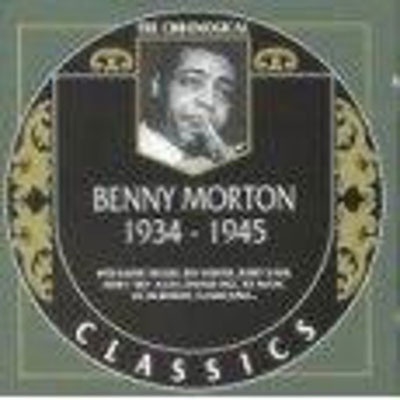
Benny Morton 1934-1945

0.0

販売価格

¥
2,490
税込
還元ポイント

廃盤

在庫状況 について

フォーマット CDアルバム
発売日 1996年11月18日
国内/輸入 輸入
レーベルClassics
構成数 1
パッケージ仕様 -
規格品番 CLASSICS906
SKU 3307517090621

構成数 : 1枚
合計収録時間 : 00:58:49

  1. 1.[CDアルバム]
    1. 1.
      Get Goin'

      アーティスト: Benny Morton

    2. 2.
      Fare-Thee-Well to Harlem

      アーティスト: Benny Morton

    3. 3.
      Tailor Made

      アーティスト: Benny Morton

    4. 4.
      We're in the Money (The Gold Diggers Song)

      アーティスト: Benny Morton

    5. 5.
      Where or When

      アーティスト: Benny Morton

    6. 6.
      Liza (All the Clouds'll Roll Away)

      アーティスト: Benny Morton

    7. 7.
      Once in a While

      アーティスト: Benny Morton

    8. 8.
      Sliphorn Outing

      アーティスト: Benny Morton

    9. 9.
      My Old Flame

      アーティスト: Benny Morton

    10. 10.
      Conversing in Blue

      アーティスト: Benny Morton

    11. 11.
      The Sheik of Araby

      アーティスト: Benny Morton

    12. 12.
      Limehouse Blues

      アーティスト: Benny Morton

    13. 13.
      Boogie

      アーティスト: Benny Morton

    14. 14.
      Williphant Willie

      アーティスト: Benny Morton

    15. 15.
      Stardust

      アーティスト: Benny Morton

    16. 16.
      Chicken at the Chester

      アーティスト: Benny Morton

作品の情報

メイン
アーティスト: Benny Morton

商品の紹介

Benny Morton didn't make very many recordings as a leader. What you've got here are apparently all of them. The 1934 band contained several musicians who had worked in Don Redman's orchestra. "Fare Thee Well to Harlem" is one of many preposterous Tin Pan Alley songs depicting a "negro" who yearns to go back to the noble South, in this case because of the questionable assumption that down there people go to church instead of hanging out in bars. Note that Duke Ellington always insisted there were more churches than nightclubs in Harlem. Ellington gave the world the diametric opposite of this song when in 1941 he composed "Jump For Joy," that ode to emancipation with its opening lyric: "Fare thee well, land of cotton, fare thee well." It's almost as if he was responding to this particular song! Will we ever know? "Tailor Made" was composed and arranged by bassist Billy Taylor, who chugs away behind the band without soloing. "The Gold Digger's Song," with its refrain of "We're in the money," came directly out of Busby Berkeley's Hollywood during the Great Depression. Nobody ever sang a hipper version of this giddy paean to economic denial than Henry "Red" Allen. Edward Inge quotes both "Yankee Doodle" and "Pagliacci" during his clarinet solo. Benny Morton's Trombone Choir was a follow-up for Roy Eldridge's Trumpet Ensemble and Coleman Hawkins & His Sax Ensemble, all brilliantly produced by Harry Lim for Keynote Records. The fact that four trombones were considered a choir is immediately understandable when you immerse yourself in their glowing tonalities. The music is sculpted with great precision, and the 'bones are able to strut their stuff largely because of the excellent rhythm section of Johnny Guarnieri, Al Hall and Sid Catlett. Although Leonard Feather is credited as the composer of "Sliphorn Outing," the tune is clearly recognizable as an upbeat version of "Avalon." You realize Al Jolson could have sued for royalties! "Sliphorn" is also a necessary blow-out after the beautifully controlled cooperation and perfectly blended harmonies of "Where or When," "Liza" and "Once in a While." The Blue Note recordings of Benny Morton's All Stars, featuring Barney Bigard and Ben Webster, are precious as lapis lazuli. "My Old Flame" comes across like an Ellington tune, for obvious reasons. "Conversing In Blue" might be one of the greatest collective improvisations in all of traditional jazz. Six men interact, three of them using wind instruments in strikingly expressive ways, carefully listening to each other while voicing their innermost feelings with honesty and passion. The ballad and the blues are perfectly matched by a pair of hot standards. All four sides were originally issued on 12" 78s, allowing additional time for extended solos and prolonged exchanges between the horns. The album ends with four obscure titles issued on the Stinson label. Benny Morton's gentle approach to the trombone is beautifully demonstrated on "Stardust." Prince Robinson's clarinet is a noticeable presence during "Boogie" and those quirkily titled romps, "Williphant Willie" and "Chicken at the Chester." Not a bad career retrospective for a man who spent most of his time playing in the brass section of other peoples' bands. ~ arwulf arwulf|
Rovi

メンバーズレビュー

レビューを書いてみませんか?

読み込み中にエラーが発生しました。

画面をリロードして、再読み込みしてください。