Jazz
CDアルバム

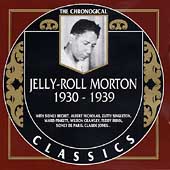
1930-1939

0.0

販売価格

¥
2,490
税込
ポイント15%還元

廃盤

在庫状況 について

フォーマット CDアルバム
発売日 2007年05月31日
国内/輸入 輸入
レーベルClassics Jazz (France)
構成数 1
パッケージ仕様 -
規格品番 CLASSICS654
SKU 3307517065421

構成数 : 1枚
合計収録時間 : 01:01:37

  1. 1.[CDアルバム]
    1. 1.
      New Crawley Blues
    2. 2.
      She Saves Her Sweetest Smiles for Me
    3. 3.
      Low Gravy - Morton, Jelly Roll Seven
    4. 4.
      Strokin' Away
    5. 5.
      Blue Blood Blues - Morton, Jelly Roll Seven
    6. 6.
      Mushmouth Shuffle - Morton, Jelly Roll Seven
    7. 7.
      Gambling Jack - Morton, Jelly Roll Seven
    8. 8.
      Fickle Fay Creep - Morton, Jelly Roll Seven
    9. 9.
      Finger Buster
    10. 10.
      Creepy Feeling
    11. 11.
      Winin' Boy Blues
    12. 12.
      Honky Tonk Music
    13. 13.
      Oh! Didn't He Ramble
    14. 14.
      High Society
    15. 15.
      I Thought I Heard Buddy Bolden Say
    16. 16.
      Winin' Boy Blues
    17. 17.
      Climax Rag
    18. 18.
      Don't You Leave Me Here
    19. 19.
      West End Blues
    20. 20.
      Ballin' the Jack
    21. 21.
      Sporting House Rag
    22. 22.
      Original Rags

作品の情報

メイン
アーティスト: Jelly Roll Morton

商品の紹介

There are a lot of Jelly Roll Morton reissues kicking around, but few of them span the 1930s the way this one does. Mr. Jelly's chronology generally gets lopped off after the last Red Hot Peppers session, often entirely omitting the rest of his remarkable story. This, then, is a valuable bundle of ensemble stomps and slow drags garnished with a few piano solos. The first session is a whopper. Wilton Crawley was a peculiar vaudevillian who played laughing hyena clarinet. During the opening track he removes the mouthpiece from the instrument and cups his hands around it, generating a series of wah-wah-wah whinnies. This makes perfect sense in a twisted sort of way. Bruce Johnson plays the washboard with great precision, adding lots of little "dings" wherever he pleases. Most of the guys in the band knew each other from having worked in the Luis Russell Orchestra. There are fine solos from Red Allen, Charlie Holmes, and that marvelous guitarist Teddy Bunn. Contrary to what the discography says, Crawley does not vocalize on this date, and Pops Foster sternly puffs away at a tuba rather than using the string bass as listed. Jelly's Red Hot Peppers were on their last couple of go-rounds during the second half of 1930, but this was still a hot band, notable for Ward Pinkett's punchy trumpet, Morton's fabulous piano, and the agility of guitarists Howard Hill and Bernard Addison. "Strokin' Away" contains a wonderful tuba solo by the mighty Pete Briggs. "Blue Blood Blues" begins and finishes with glorious tones in both registers from clarinetist Albert Nicholas.
Years passed before Jelly was able to record again. When he sat down to record piano solos in 1938, his overdeveloped showmanship was bottled up and ready to come pouring out. According to Morton, the lightning-quick "Finger Buster" was supposed to be one of the most difficult pieces ever written for the piano. What it amounts to is a flashy display of technical dexterity. "Creepy Feeling" is a beautiful example of the Caribbean influence that Jelly was fond of demonstrating. "Honky Tonk Music" also breathes with a bit of the "Spanish tinge," along with a deliberate walking bassline, soon to be known as boogie-woogie. The first "New Orleans Jazzmen" session bristles with Sidney Bechet, Albert Nicholas, and Sidney DeParis. "High Society" sounds like they're taking it right down the middle of the street, which is where "Oh, Didn't He Ramble?" would also have taken place. Jelly then sings cleaned-up lyrics to a couple of slow drags, giving listeners a chance to savor the tenor saxophone of Happy Caldwell. While "Buddy Bolden" was originally a song about farting, the notorious "Winin' Boy" dates from Morton's tenure as a Storyville cathouse piano player. Jelly's Library of Congress recording of his erstwhile theme song contains some of the most sexually explicit lyrics ever sung into a recording microphone. "Winding Boy" was a term used to describe a "tireless stud." While we're on the subject, James Scott's "Climax Rag" is pleasantly stimulating, as are all eight selections from September of 1939. This wonderful disc ends with two delightful solos including "Original Rags," Scott Joplin's masterpiece of 1899. ~ arwulf arwulf|
Rovi

メンバーズレビュー

レビューを書いてみませんか?

読み込み中にエラーが発生しました。

画面をリロードして、再読み込みしてください。