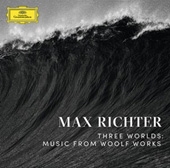
オンラインキャンペーン価格クラシック スペシャルプライス15%オフ
クラシック
CDアルバム

販売価格

¥
3,490
税込

¥ 524 (15%)オフ

¥
2,966
税込
還元ポイント

販売中

在庫わずか
発送目安
当日~翌日

在庫状況 について

・各種前払い決済は、お支払い確認後の発送となります(Q&A)

フォーマット CDアルバム
発売日 2017年01月24日
国内/輸入 輸入
レーベルDG Deutsche Grammophon
構成数 1
パッケージ仕様 -
規格品番 4797158
SKU 028947971580

構成数 : 1枚
合計収録時間 : 01:06:09
Three Worlds - Music from Woolf Works presents music from Woolf Works, an award-winning ballet triptych that reunited Max Richter with his Infra collaborator, choreographer Wayne McGregor. Like Infra, which paid tribute to T.S. Eliot's The Waste Land and Schubert's Winterreise, Woolf Works is an homage to three of Virginia Woolf's greatest novels: Mrs. Dalloway, Orlando, and The Waves. And, like his previous collaboration with McGregor, Three Worlds is a striking testament to how eloquently Richter translates the work of an artist working in another medium into compelling music. As he captures the depth and breadth of the worlds Woolf created with her writing, he reflects on his own body of work. Following an excerpt of "Craftsmanship," the only surviving recording of Woolf's voice (and another reminder of how deftly Richter combines spoken word and found sounds into his music), Three Worlds begins with Dalloway-inspired pieces. The interplay of strings and piano on "Meeting Again" is quintessentially Richter, the tension between structure and aching emotions echoing his breakthrough The Blue Notebooks; meanwhile, the flowing sweetness of "In the Garden" is as imbued with poignant details as the novel that inspired it. Later, "War Anthem" evokes the novel's tragic World War I veteran Septimus Smith with its distant -- but still ominous -- drums. Richter's flair for incorporating electronics into his music comes to the fore on the Orlando portion of Three Worlds, arguably the album's most exciting stretch. He echoes the daring, unexpected life of the novel's gender-swapping protagonist with short, brisk pieces that move with too much purpose to be merely whimsical: "Modular Astronomy" sounds like it's streaking through time and space, while the arpeggios on "The Genesis of Poetry" trace clearly defined arcs. The Orlando pieces also show off Richter's impressive range, spanning the echoing drones of "Morphology" and the elegantly futuristic mesh of electronics and strings on "The Explorers." This part of Three Worlds could easily be an album in its own right, something that could also be said of its final section, The Waves. Prefaced by a reading of Woolf's suicide note by Gillian Anderson, "Tuesday" closes the album with slowly unfolding strings, brass, and vocals that are somehow unsettling in their steadiness, mirroring the concept of shared consciousness in the novel. While the album's finale may lose something without the ballet's visuals, it's still impressive. Coming after the epic length and ambition of Sleep, Three Worlds could seem like a more minor work, but in its own right, it's another triumphant reminder of Richter's brilliance as a translator and creator. ~ Heather Phares

『マックス・リヒター:3つの世界~ウルフの詩による音楽』

【曲目】
マックス・リヒター:3つの世界(ヴァージニア・ウルフの詩による)

Mrs Dalloway
1 Words, 2 In the Garden, 3 War Anthem, 4 Meeting Again
Orlando
5 Memory is the Seamstress, 6 Modular Astronomy, 7 Entropy, 8 Transformation, 9 Morphology
10 The Tyranny of Symmetry, 11 The Explorers, 12 Persistence of Images , 13 Genesis of Poetry
14 Possibles, 15 Love Songs
The Waves
16 Tuesday

【演奏】
マックス・リヒター(ピアノ, モジュラーシンセサイザー),
ロバート・ジーグラー(指揮)
バーベルスベルク・ドイツ・フィルムオーケストラ, 他

  1. 1.[CDアルバム]
    1. 1.
      Words
    2. 2.
      In the Garden
    3. 3.
      War Anthem
    4. 4.
      Meeting Again
    5. 5.
      Memory Is the Seamstress
    6. 6.
      Modular Astronomy
    7. 7.
      Entropy
    8. 8.
      Transformation
    9. 9.
      Morphology
    10. 10.
      The Tyranny of Symmetry
    11. 11.
      The Explorers
    12. 12.
      Persistence of Images
    13. 13.
      Genesis of Poetry
    14. 14.
      Possibles
    15. 15.
      Love Songs
    16. 16.
      Tuesday

作品の情報

商品の紹介

ウェイン・マクレガー振付による新作バレエ音楽

2015年の優れたバレエ・プロダクション。マックス・リヒターが、振付家ウェイン・マクレガーとイギリスの小説家ヴァージニア・ウルフの詩から創作された新作アルバムです。このバレエは、2015年に初演され、批評家サークル賞を受賞し、最高のクラシック・コレオグラフィー賞を受賞し、オリヴィエ賞を受賞しました。「説得力のある感動的な体験」(オブザーバー紙)「エネルギーを放つ優れて思慮深い作品」(インディペンデント紙)「記憶、狂気、忘れられない瞑想」「豪華な雰囲気のスコア」(ガーディアン紙)と高評価を得ています。管弦楽のエピソードを電子的なテクスチャと音風景が包み込み、強力で説得力のあるエモーショナルな音楽を作り上げています。そして このアルバムは1937年にBBCで録音されたヴァージニア・ウルフ自身の朗読(エッセイ「Craftsmanship])から始まります。
ユニバーサル・ミュージック/IMS
発売・販売元 提供資料(2016/11/30)

Pitchfork (Website) - "[A] slightly truncated version of Richter's score proves something he has been talking about quite a bit in the later years of his career: that his work is unified by an obsession with storytelling."
Rovi

German-British composer Max Richter has been known mostly for his film scores. One of the best of them, that for Arrival, was heard by millions of people and was ideally timed to attract listeners to some of Richter's non-cinematic music. Three Worlds -- Music from Woolf Works was abridged from a ballet entitled Woolf Works, which consisted mostly of short chunks that work reasonably well in abstract form. Each of the work's three sections begins with a spoken quotation from Virginia Woolf herself, the first of them consisting of an actual recording of Woolf's voice from 1937; the other two are read by actresses. The rest of the movements are instrumental and are connected to a greater or lesser degree to the three novels named in the titles of the three sections, Mrs Dalloway, Orlando, and The Waves. Only the Woolf quotation for Orlando comes from the novel named in its section title. The music in that section consists of a set of variations on the Baroque-era-ground La Folia, and the medium is constantly shifting: from full orchestra to chamber instruments, solo groups, and electronic variations (the music is performed by Richter himself on piano and synthesizer, plus the Deutches Filmorchester Babelsberg and assorted other musicians). You wouldn't guess Virginia Woolf if you heard it cold, but the music is not quite like anything else you will have heard. The final section, by contrast, has a powerfully direct emotional impact. The opening reading, spoken by Gillian Anderson, is taken from Woolf's suicide note, and although Richter indicates that the rest of the music evokes the poetic mood of The Waves, its intense climax (unlike the rest of the music, this is a lengthy movement of more than 20 minutes) seems to keep the suicide note in the listener's mind. Although the work as a whole is not a film score, it has the flavor of one, and it opens up intriguing possibilities for the expansion of that language to other settings. Certainly recommended for anyone who has noticed and liked the music for Arrival.
Rovi

Three Worlds – Music from Woolf Works presents music from Woolf Works, an award-winning ballet triptych that reunited Max Richter with his Infra collaborator, choreographer Wayne McGregor. Like Infra, which paid tribute to T.S. Eliots The Waste Land and Schuberts Winterreise, Woolf Works is an homage to three of Virginia Woolfs greatest novels: Mrs. Dalloway, Orlando, and The Waves. And, like his previous collaboration with McGregor, Three Worlds is a striking testament to how eloquently Richter translates the work of an artist working in another medium into compelling music. As he captures the depth and breadth of the worlds Woolf created with her writing, he reflects on his own body of work. Following an excerpt of Craftsmanship, the only surviving recording of Woolfs voice (and another reminder of how deftly Richter combines spoken word and found sounds into his music), Three Worlds begins with Dalloway-inspired pieces. The interplay of strings and piano on Meeting Again is quintessentially Richter, the tension between structure and aching emotions echoing his breakthrough The Blue Notebooks; meanwhile, the flowing sweetness of In the Gardenis filled with as many poignant details as the novel that inspired it. Later, War Anthem evokes the novels tragic World War I veteran Septimus Smith with its distant -- but still ominous -- drums. Richters flair for incorporating electronics into his music comes to the fore on the Orlando portion of Three Worlds, arguably the albums most exciting stretch. He echoes the daring, unexpected life of the novels gender-swapping protagonist with short, brisk pieces that move with too much purpose to be merely whimsical: Modular Astronomy sounds like its streaking through time and space, while the arpeggios on The Genesis of Poetry trace clearly defined arcs. The Orlando pieces also show off Richters impressive range, spanning the echoing drones of Morphology and the elegantly futuristic mesh of electronics and strings on The Explorers. This part of Three Worlds could easily be an album in its own right, something that could also be said of its final section, The Waves. Prefaced by a reading of Woolfs suicide note by Gillian Anderson, Tuesday closes the album with slowly unfolding strings, brass, and vocals that are somehow unsettling in their steadiness, mirroring the concept of shared consciousness in the novel. While the albums finale may lose something without the ballets visuals, its still striking. Coming after the epic length and ambition of Sleep, Three Worlds could seem like a more minor work, but in its own right, its another triumphant reminder of Richters brilliance as a translator and creator. ~ Heather Phares
Rovi

メンバーズレビュー

レビューを書いてみませんか?

読み込み中にエラーが発生しました。

画面をリロードして、再読み込みしてください。