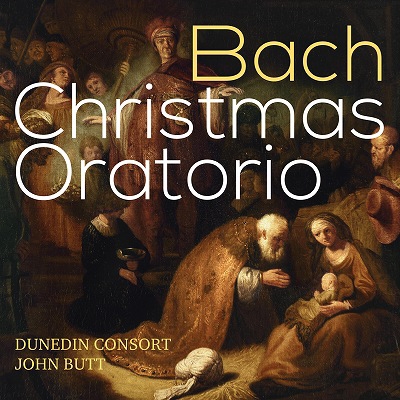
ダンディン・コンソートのバッハ第7弾!
ついに「クリスマス・オラトリオ」登場!
「マタイ受難曲」の"1742年頃最終演奏版"(CKD 313)に始まり、「ミサ曲ロ短調」の"リフキン校訂ブライトコップ版2006"(CKD 354)、「ヨハネ受難曲」の"典礼において演奏されたバッハの受難曲の再現"(CKD 419)、「ブランデンブルク協奏曲」の"フレンチ・ピッチ版(A=392Hz)"(CKD 430)、そして"バッハの最初のクリスマスの晩課の再現"をした「マニフィカト&クリスマス・カンタータ」(CKD 469)など、綿密な時代考証、長年にわたるバッハ研究に基づく様々な異稿版の発掘や復元に取り組み続けているJ.S.バッハ演奏・研究の世界的権威、ジョン・バット。ジョン・バット率いるスコットランドのピリオド・アンサンブル、ダンディン・コンソート(ダニーデン・コンソート)によるJ.S.バッハ録音の第7弾は、バッハの四大宗教曲の最後の一つ「クリスマス・オラトリオ」が登場!「マニフィカト&クリスマス・カンタータ」(CKD 469)は、英グラモフォン賞にノミネートしたほか、レコード芸術海外盤REVIEW、英グラモフォン誌、英BBCミュージック・マガジン誌でいずれも「特選盤」に選ばれるなど絶賛を博し、ジョン・バットはこの録音の功績によって2015年にOBE(大英帝国勲章)を叙されています。それだけに、続編ともなるこの「クリスマス・オラトリオ」にも大きな期待がかかります。もちろん、フィリップ・ホッブスによる超優秀録音も健在です。2016年のクリスマス・アルバムの最有力候補としても注目!
東京エムプラス
発売・販売元 提供資料(2016/08/10)
Released ahead of the 2016 holiday season, this recording of Bach's Christmas Oratorio, BWV 248, entered a field where there was plenty of competition, but the performance by Scotland's historically oriented Dunedin Consort have a great deal to recommend them. For one thing, conductor John Butt seems to understand the dynamic of this somewhat troublesome work better than most other interpreters. Much of the music consists of reworkings of earlier cantata movements, some of them secular. This was of course typical of Bach's way of working, and a convincing performance such as Butt's provides conveys not only the differences among the six cantatas that compose the oratorio, but also some of Bach's thinking as he put the work together. Butt varies the forces used for the cantatas, which makes sense (they were originally performed separately, on different Sundays), and he forges attractive contrasts between them. In so doing, he also strikes a middle path between the one-voice-per-part readings fashionable in historical performance circles and those with larger choirs: he doubles the vocal lines in the choral movements of the cantatas with trumpets (the first, third, and sixth), and uses quartets in the others. Leaving aside the larger debate over this approach, it seems to work better with the Christmas Oratorio than with other works (given that it is made up of cantatas rather than more grandly conceived music), and Butt's solution is both clever and musically solid. Further, his mostly Scottish soloists add personality to the music and are worth hearing in themselves. Sample the uncanny, piercing voice of soprano Joanne Lunn in the famous "echo" aria "Flosst, mein Heiland, flosst den Namen" from the fourth cantata; it matches the slightly edgy and tense, but never unpleasant, tone of the whole. The sonic environment of Edinburgh's Greyfriars Church is ideal. This is a performance in which intelligent, small decisions cohere into a persuasive larger whole.
Rovi