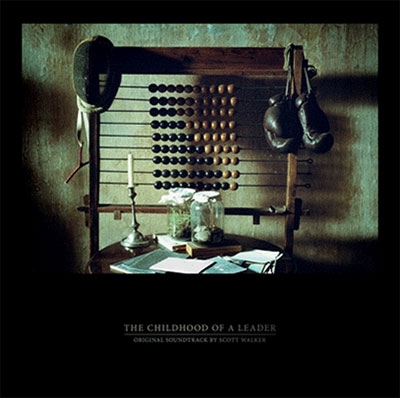
販売価格
販売中
お取り寄せお取り寄せの商品となります
入荷の見込みがないことが確認された場合や、ご注文後40日前後を経過しても入荷がない場合は、取り寄せ手配を終了し、この商品をキャンセルとさせていただきます。
| フォーマット | CDアルバム |
| 発売日 | 2016年08月19日 |
| 国内/輸入 | 輸入 |
| レーベル | 4AD |
| 構成数 | 1 |
| パッケージ仕様 | - |
| 規格品番 | CAD3620CD |
| SKU | 652637362022 |
構成数 : 1枚
合計収録時間 : 00:30:16
Audio Mixers: Peter Walsh ; Scott Walker.
Recording information: Angel Studios, London; Miloco, Westpoint Studios, London.
Director: Brady Corbet.
Photographer: Agatha A. Nitecka.
Heard in the context of director Brady Corbet's provocative, feature-length debut film, Scott Walker's original score for The Childhood of a Leader is so successful, it's inseparable from the images but adds brutality. (It was deliberately mixed five-percent above the Dolby standard to be intrusive.) The film's narrative is loosely based on a Jean-Paul Sartre short story of the same title published in 1939. Corbet's depiction is of a nine-year-old boy in 1918, forced to live in France while his dad helps negotiate the Treaty of Versailles for President Woodrow Wilson. Set in acts -- known as "tantrums" -- these are the formative years of a fascist dictator. Walker's musical engagement with the topic of fascism dates back to 1978's "The Electrician," from the Walker Brothers 1978 reunion album Nite Flights; it expressionistically detailed the nature of power exchanged in sadomasochistic relationships. This is Walker's first exercise in the medium since scoring Leo Carax's Pola X in 1999.
For music fans who haven't seen the film, the question as to whether or not the soundtrack holds as a standalone document is pertinent. Co-produced by Walker and Peter Walsh, the half-hour-long score was performed by a 62-piece orchestra of strings, winds, reeds, brass, and percussion, and conducted by longtime collaborator Mark Warman. After a brief, humorous "Orchestral Tuning Up," the listener is jarred to attention by rumbling cellos and violas in a repetitive, almost vampish pattern. Violins enter, adding another harmonic layer hovering on the edges of dissonance in minor-key drama. Brass and sawed middle-register violins expand the palette until everything swirls and bleeds in a Bernard Hermann-esque chase scene score. Walker's serial cues are equally satisfying. Listen to the trilled exchanges of violins and piccolos in "Down the Stairs" and the striated Ligeti-esque dissonances in "Up the Stairs." In the latter, strings increase the tension until it crescendos in an unsettling finale. In "Boy, Mirror, Car Arriving," cellos seethe and smolder, threatening to erupt and/or collapse at any moment. The droning brass introducing "Third Tantrum" recalls Komeda, but is offset by strings in shifting time signatures and keys. "On the Way to the Meeting" is introduced by cellos playing a frenetic circular pattern answered by military snares and middle- and high-register violins before being resolved by horns and tubas in long, single foreboding notes. "The Meeting" offers a restricted, brooding dynamic with a deceptively large timbral palette that would have been at home on any Walker solo album. The "Finale," with its bleating, fat, low brass (a la Scelsi) prepares the ground for an all-out aural assault of drums and percussion, noise, dissonant siren-like horns, and squalling strings, all of which erase notions of anything but war. The mood is lightened, for only a moment, in the concluding "New Dawn," but the composer can't resist: the dramatic movement overcomes perceived tranquility in the final notes, making this a dark, turbulent, and welcome entry in Walker's catalog. ~ Thom Jurek
読み込み中にエラーが発生しました。
画面をリロードして、再読み込みしてください。