オンラインキャンペーン価格クラシック スペシャルプライス15%オフ
クラシック
CDアルバム

販売価格

¥
2,790
税込

¥ 419 (15%)オフ

¥
2,371
税込
還元ポイント

販売中

お取り寄せ
発送目安
14日~35日

お取り寄せの商品となります

入荷の見込みがないことが確認された場合や、ご注文後40日前後を経過しても入荷がない場合は、取り寄せ手配を終了し、この商品をキャンセルとさせていただきます。

フォーマット CDアルバム
発売日 2016年12月15日
国内/輸入 輸入
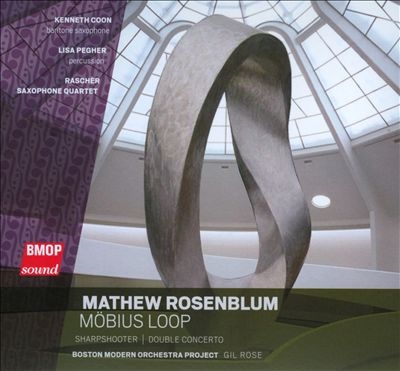
レーベルBMOP/sound
構成数 1
パッケージ仕様 -
規格品番 BMOP1032
SKU 676695024623

構成数 : 1枚
合計収録時間 : 00:59:04
録音 : ステレオ (---)

  1. 1.[CDアルバム]
    1. 1.
      Sharpshooter
    2. 2.
      Mobius Loop (Quartet version)
    3. 3.
      Double Concerto~1. Movement 1
    4. 4.
      Double Concerto~2. Movement 2
    5. 5.
      Double Concerto~3. Movement 3
    6. 6.
      Double Concerto~4. Movement 4
    7. 7.
      Double Concerto~5. Movement 5
    8. 8.
      Mobius Loop (Quartet & orchestra version)

作品の情報

商品の紹介

The earlier works of Pittsburgh-based composer Mathew Rosenblum featured a microtonal scale of his own development, with 21 (or 19) pitches to the octave. The works on this release (written between 2000 and 2012) still make use of microtones. To that feature, however, Rosenblum has added a careening mix of other influences, including jazz, rock, abstract contrapuntal forms, Latin music Rosenblum encountered as a high school student in New York City, and more. It sounds like an example of annoying postmodern pastiche, but what holds it together is that there's a consistent structural principle as all the different sounds go by. That principle is tonality, and annotator Andrew Druckenbrod likens Rosenblum's use of it to Berg's in his Violin Concerto: the tonality is "built into" the music's basic technical device (twelve-tone organization in Berg's case, the microtonal scale in Rosenblum's). Another way to look at it would be that the microtones deepen the harmonic shading as a work proceeds here, and the music is actually highly listenable despite its hodgepodge of sources. Check out the first track, Sharpshooter, to get a taste of the ideas that are applied in the longer compositions: it features a simple motor rhythm over which a 19-tone scale is manipulated so as to reveal new harmonic colors as the work proceeds. The new colors are accented by a variety of unexpected instrumental sonorities and attacks. In the title work, Mobius Loop, it is hard to hear a Mobius loop or anything but a conventional ABA structure with some inversions and variations. The Double Concerto for baritone, marimba, and orchestra has a palindromic shape that's effectively grafted onto jazz moves that seem closely allied to Rosenblum's language; it's a hugely enjoyable work that despite its abstract structure seems to bring something new at every turn. The Boston Modern Orchestra Project has something here that will hold appeal beyond the usual circles of contemporary ensemble music.
Rovi

メンバーズレビュー

レビューを書いてみませんか?

読み込み中にエラーが発生しました。

画面をリロードして、再読み込みしてください。