Jazz
CDアルバム

販売価格

¥
2,629
税込
還元ポイント

廃盤

在庫状況 について

フォーマット CDアルバム
発売日 1999年05月04日
国内/輸入 輸入
レーベルClassics Jazz (France)
構成数 1
パッケージ仕様 -
規格品番 1039
SKU 723723541727

構成数 : 1枚
合計収録時間 : 01:08:59
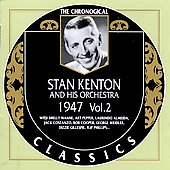
Personnel: June Christy (vocals); Laurindo Almeida, Billy Bauer (guitar); Buddy DeFranco (clarinet); Frank Pappalardo, George Weidler, Art Pepper (alto saxophone); Flip Phillips, Warren Weidler, Bob Cooper (tenor saxophone); Bob Gioga (baritone saxophone); Chico Alvarez, Dizzy Gillespie, Ken Hanna, Al Porcino, Ray Wetzel, Buddy Childers (trumpet); Milt Bernhart, Eddie Bert, Harry Betts, Harry Forbes, Bill Harris , Bart Varsalona (trombone); Nat King Cole (piano); Shelly Manne, Buddy Rich (drums); Carlos Vidal (congas); Jack Costanzo (bongos); Salvator Armenta, Machito, Rene Touzet (maracas). Liner Note Author: Anatol Schenker. Recording information: Capitol, Los Angeles, CA., Capi (09/24/1947-12/22/1947). Director: Stan Kenton. Photographer: Lonie Black. Like its immediate predecessor, volume five in the Classics Stan Kenton chronology contains a substantial amount of material composed and/or arranged by Sicilian-American Pete Rugolo, a student of Darius Milhaud and Kenton's right-hand man during the mid- to late '40s. It was Rugolo who assisted Kenton during his experiments with modernized, "progressive" big band jazz. (Speaking of modern jazz, note the return of alto saxophonist Art Pepper on the session of October 22, 1947, which opened with Rugolo's "Unison Riff.") Following the example of Dizzy Gillespie, Kenton was now incorporating more Latin percussion and Caribbean rhythms than ever into his music, and even hired Cuban bandleader Machito to play maracas on the sessions which took place during the latter part of December 1947. Smug, contentious and successful, Kenton attracted controversy like a lightning rod. Part of the reason for this was the unusual and at times startling nature of his brand of musical futurism. A more unsavory aspect of Kenton's reputation was his annoying habit of making what appeared to be arrogantly racist statements. The most famous example of this regrettable tendency was remembered by several eyewitnesses who claimed that Kenton, after participating in a "battle of the bands" at the Savoy Ballroom, got drunk and staggered up to Dizzy Gillespie saying "We can play your music better than you can." Diz -- to his credit -- simply shrugged, said "yeah" and walked away. Walter Gilbert Fuller adds: "He was juiced. But he was saying while he was juiced what he really meant." Here's how Gillespie assessed the overall situation: "Stan Kenton was the copyist. Stan Kenton went out and got a conga drummer after he saw me with one. He hired Carlos Vidal, lured him away from Machito, and put him along with another Latin drummer, Jack Costanzo, in his band. But Stan didn't know what to do with it. He just left it there and they made up their own minds what to play. All this happened after he came up to the Savoy and heard us while Chano Pozo was in the band. Now, I don't just take what they do and leave it there. I don't pass myself off as an expert on Latin music, but the guys who play it respect me for knowing how to take what they do, put it in with my music, and make it right. I never take nothing from nobody without delivering something in return. I think when people figured we might make a lot of money -- that started the controversy about who would get credit for creating modern jazz. My viewpoint was always that the credit should go to the ones who developed and played it best." Interestingly, Dizzy Gillespie is heard on this disc alongside Buddy DeFranco, Bill Harris and Flip Phillips as members of the Metronome All Stars in combination with Stan Kenton & His Orchestra (a total of 28 players!) on Pete Rugolo's "Metronome Riff," which was recorded on December 21, 1947. Gillespie even toured with Kenton, sometimes leading the band. Later in life, Gillespie bluntly asserted that Kenton "left out the fundamentals," unlike Miles Davis whose music, said Diz, "is based on rhythm and also the blues." Whether or not you agree with that assessment, and while many of Kenton's recor to be continued...
録音 : モノラル (Studio)

  1. 1.[CDアルバム]
    1. 1.
      Curiosity
    2. 2.
      Theme to the West
    3. 3.
      Abstraction (Prologue, Suite, Third Movement)
    4. 4.
      Fugue for Rhythm Section
    5. 5.
      Monotony
    6. 6.
      Unison Riff
    7. 7.
      Lament
    8. 8.
      Introduction to a Latin Rhythm (Prologue Suite, First Movement)
    9. 9.
      Impressionism
    10. 10.
      I Told Ya I Love Ya, Now Get Out
    11. 11.
      He Was a Good Man as Good Men Go
    12. 12.
      Cuban Carnival
    13. 13.
      Peanut Vendor, The
    14. 14.
      Lonely Woman
    15. 15.
      Thermopylae
    16. 16.
      Metronome Riff
    17. 17.
      Introduction to a Latin Rhythm (Prologue Suite, First Movement)
    18. 18.
      Journey to Brazil (Prologue Suite, Fourth Movement-Finale)
    19. 19.
      How High the Moon
    20. 20.
      Harlem Holiday
    21. 21.
      This Is My Theme
    22. 22.
      Bongo Riff
    23. 23.
      Somnambulism
    24. 24.
      Interlude

作品の情報

メイン
アーティスト: Stan Kenton & His Orchestra

メンバーズレビュー

レビューを書いてみませんか?

読み込み中にエラーが発生しました。

画面をリロードして、再読み込みしてください。