World/Reggae
CDアルバム

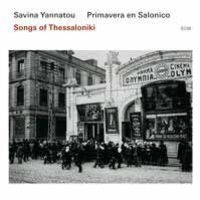
Songs of Thessaloniki

0.0

販売価格

¥
3,190
税込
還元ポイント

販売中

在庫わずか
発送目安
当日~翌日

在庫状況 について

・各種前払い決済は、お支払い確認後の発送となります(Q&A)

フォーマット CDアルバム
発売日 2015年03月03日
国内/輸入 輸入
レーベルECM
構成数 1
パッケージ仕様 -
規格品番 54709151
SKU 602547091512

構成数 : 1枚
合計収録時間 : 01:07:32
Liner Note Author: Sofia Giannatou. Recording information: Sierra Studios, Athens (02/2014). Photographer: Joseph Pigassou. Arranger: Kostas Vomvolos. The title of Savina Yannatou's fourth ECM album seems simple enough. The old city is home to the singer and her virtuoso band, Primavera en Salonico. But this 17-track set is far more than a collection of songs from a particular place -- especially one as socially complex as Thessaloniki. Historically, it drew travelers, immigrants and refugees of many creeds, cultures and religions: Sephardic Jews (at one time its biggest population), Turks, Pontiac Greeks, Armenians, Serbs, Bulgarians, even Northern Europeans. It flowered in the late 19th and early 20th century, as many religions and cultures lived in relative harmony until near the end of the First World War. This music reflects the transcultural past and their influence upon the present. Yannatou and Primavera en Salonico, under the direction of multi-instrumentalist /arranger Kostas Vomvolos, remake and remodel them -- sometimes minimally, sometimes radically, always soulfully -- in their own image. Album opener "Apolytikion Agiou Dimitriou" is a Byzantine-era Greek hymn to the city's patron Saint Dimitrios rendered with haunting reverence amid droning accordion and bowed bass; it is reprised as an instrumental as a bookend. The Sephardic "A la scola del Alianza" with flute, accordion, and nylon string guitar adorns Yannatou's singing. She has always refused fashionable, disciplined classicism in favor of an unaffected roots style that gives her freedom to improvise and uncover tones, rhythms and phrasing otherwise hidden in melody. The traditional Pontiac Greek song, "The Patrida Mou Ehasa," is reshaped to include Middle Eastern modes; oud, ney and percussion layer an extra dimension onto its contemporary lyric while retaining the core of its original melody. The gorgeous "Iptidadan Yol Sorarsan," is a Turkish Sufi hymn about the Prophet Muhammad's son-in-law, while "Calin Davullari," a Turkish folk song, is delivered almost straight with slight instrumental embellishments. "La Cantigua del Fuego" is about the fire of 1917 that destroyed the center of the city. It commences rapidly, in whispered, terrified spoken lines atop urgently plucked oud and violin. Eventually a Sephardic melody mournfully asserts itself from the ashes, revealing how much has been lost. Elsewhere on the album, improvisation and gently dissonant tonalities entwine with traditional frameworks, as in the Bulgarian song "Dimo Is Solun Heshe" and the two remebetika songs "To Yelekaki" and "Yedi Kule." "To Salonica" is an Irish folk song that relates the aftermath of WWI's toll on Thessaloniki. Yannatou sings in English, with a Weimar cabaret lilt, underscoring the poignancy in the lyric. The Greek "Poulakin Eiha Se Klouvi" is delivered as a near modal blues, while the Kosovo-Serbian hymn "Jelena Solun Devojko" mirrors the feel with trilling accordion drones, groaning violin, and elliptical percussion, before it transforms into a slow, sacred dance. Songs of Thessaloniki is a tribute but it is also an extension of history. Yannatou and Primavera en Salonico made room for the ghost shadows of the musical and cultural past to echo, reverberate and inform their present. ~ Thom Jurek

  1. 1.[CDアルバム]
    1. 1.
      Apolitikion Agiou Dimitriou
    2. 2.
      A La Scola Del Allianza
    3. 3.
      Tin Patrida Mou Ehasa
    4. 4.
      Dimo Is Solun Hodeshe
    5. 5.
      Cantiga Del Fuego, La
    6. 6.
      Una Muchacha En Selanica
    7. 7.
      Iptidadan Yol Sorarsan
    8. 8.
      Qele-Qele
    9. 9.
      Calin Davullari
    10. 10.
      To Yelekaki
    11. 11.
      Salonika
    12. 12.
      Inchu Bingyole Mdar?
    13. 13.
      Jelena Solun Devojko
    14. 14.
      Yedi-Koule
    15. 15.
      Poulakin Eiha Se Klouvi
    16. 16.
      Pismo Dojde Od Soluna Grada
    17. 17.
      Apolitikion Agiou Dimitriou

作品の情報

メイン
アーティスト: Savina Yannatou

ゲスト
アーティスト: Primavera en Salonico

オリジナル発売日:2015年

商品の紹介

Savina Yannatouの7年ぶりとなるECM4作目が遂に登場。

■彼女らのホームタウンの喚起ともいえる作品でギリシャのテッサロニキの複雑で豊かな歴史に深く入った作品。
■”バルカンのエルサレム”と言われてから、テッサロニキは多くの文化、宗教、エスニック・コミュニティの本拠地となってきたのだ。ギリシャ、トルコ、ユダヤ、ブルガリア、アルメニア、セルビア、マケドニアなど様々な人々がこの都市でそれぞれ生きてきたのだ。Yannatouはそのすべての人々に向けて様々な言語で歌う。 中でも、街の幽霊に語らせたアイリッシュ・ソングなどはとてもユニーク。パーカッションのKostas Vomvolosのアレンジにでバンド Primavera en Salonicoはこれまで以上に楽しそうで様々な顔を見せてくれている注目のワールド作品!
発売・販売元 提供資料(2015/02/10)

The title of Savina Yannatou's fourth ECM album seems simple enough. The old city is home to the singer and her virtuoso band, Primavera en Salonico. But this 17-track set is far more than a collection of songs from a particular place -- especially one as socially complex as Thessaloniki. Historically, it drew travelers, immigrants and refugees of many creeds, cultures and religions: Sephardic Jews (at one time its biggest population), Turks, Pontiac Greeks, Armenians, Serbs, Bulgarians, even Northern Europeans. It flowered in the late 19th and early 20th century, as many religions and cultures lived in relative harmony until near the end of the First World War. This music reflects the transcultural past and their influence upon the present. Yannatou and Primavera en Salonico, under the direction of multi-instrumentalist /arranger Kostas Vomvolos, remake and remodel them -- sometimes minimally, sometimes radically, always soulfully -- in their own image. Album opener "Apolytikion Agiou Dimitriou" is a Byzantine-era Greek hymn to the city's patron Saint Dimitrios rendered with haunting reverence amid droning accordion and bowed bass; it is reprised as an instrumental as a bookend. The Sephardic "A la scola del Alianza" with flute, accordion, and nylon string guitar adorns Yannatou's singing. She has always refused fashionable, disciplined classicism in favor of an unaffected roots style that gives her freedom to improvise and uncover tones, rhythms and phrasing otherwise hidden in melody. The traditional Pontiac Greek song, "The Patrida Mou Ehasa," is reshaped to include Middle Eastern modes; oud, ney and percussion layer an extra dimension onto its contemporary lyric while retaining the core of its original melody. The gorgeous "Iptidadan Yol Sorarsan," is a Turkish Sufi hymn about the Prophet Muhammad's son-in-law, while "Calin Davullari," a Turkish folk song, is delivered almost straight with slight instrumental embellishments. "La Cantigua del Fuego" is about the fire of 1917 that destroyed the center of the city. It commences rapidly, in whispered, terrified spoken lines atop urgently plucked oud and violin. Eventually a Sephardic melody mournfully asserts itself from the ashes, revealing how much has been lost. Elsewhere on the album, improvisation and gently dissonant tonalities entwine with traditional frameworks, as in the Bulgarian song "Dimo Is Solun Heshe" and the two remebetika songs "To Yelekaki" and "Yedi Kule." "To Salonica" is an Irish folk song that relates the aftermath of WWI's toll on Thessaloniki. Yannatou sings in English, with a Weimar cabaret lilt, underscoring the poignancy in the lyric. The Greek "Poulakin Eiha Se Klouvi" is delivered as a near modal blues, while the Kosovo-Serbian hymn "Jelena Solun Devojko" mirrors the feel with trilling accordion drones, groaning violin, and elliptical percussion, before it transforms into a slow, sacred dance. Songs of Thessaloniki is a tribute but it is also an extension of history. Yannatou and Primavera en Salonico made room for the ghost shadows of the musical and cultural past to echo, reverberate and inform their present. ~ Thom Jurek|
Rovi

メンバーズレビュー

レビューを書いてみませんか?

読み込み中にエラーが発生しました。

画面をリロードして、再読み込みしてください。