Jazz
CDアルバム

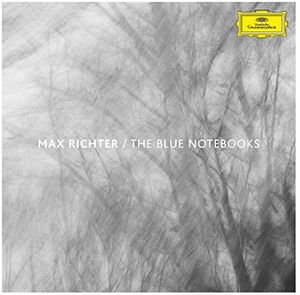
Max Richter: The Blue Notebooks

3.5

販売価格

¥
2,690
税込
還元ポイント

在庫状況 について

フォーマット CDアルバム
発売日 2015年02月24日
国内/輸入 輸入
レーベルDG Deutsche Grammophon
構成数 1
パッケージ仕様 -
規格品番 4794443
SKU 028947944430

構成数 : 1枚
合計収録時間 : 00:47:10
Personnel: Max Richter (piano, electronics); Louisa Fuller, Natalia Bonner (violin); John Metcalfe (viola); Philip Sheppard, Chris Worsey (cello). Audio Mixer: Max Richter . Recording information: Eastcote Studios (2003); Hear No Evil Studios (2003); Studio Scoring Stage, Babelsberg (2003); Eastcote Studios (2010); Hear No Evil Studios (2010); Studio Scoring Stage, Babelsberg (2010). Photographers: Yulia Mahr; Wolfgang Borrs. Though his evocative debut album Memoryhouse introduced Max Richter's fusion of classical music, electronica and found-sounds (a style he calls "post-Classical"), it's his follow-up, The Blue Notebooks, that really showcases the style's -- and Richter's -- potential. The album's ten pieces were inspired by Kafka's Blue Octavo Notebooks, and quotes such as "Everyone carries a room about inside them. This fact can even be proved by means of the sense of hearing. If someone walks fast and one pricks up one's ears and listens, say at night, when everything round about is quiet, one hears, for instance, the rattling of a mirror not quite firmly fastened to the wall," which are read by actress Tilda Swinton, define the spare, reflective intimacy of The Blue Notebooks. The album is simpler than Memoryhouse, with a smaller ensemble of musicians playing on it and a shorter running time, but its restraint makes it a more powerful work -- it's so beautiful and fully realized that it doesn't need to be showy. As other reviews have mentioned, Richter tends to be a more traditional-minded composer than influences like Brian Eno, Philip Glass and Steve Reich. However, his sound works so well and seems so natural because he's not trying to be overtly experimental; the album ranges from pieces with little or no electronic elements, such as the piano-driven "Arboretum," to "Old Song," which is based on a busy, chilly beat that sounds like dripping water. Richter's music embraces all of the sounds that had an impact on him, but more important is the emotional impact that The Blue Notebooks has on its listeners; despite its high-concept origins, it's quite an affecting album. The warm-hearted piano melody on "Horizon Variations" and the delicate, somehow reassuring-sounding string piece "On the Nature of Daylight" both sound vaguely familiar, and are all the more haunting for it. Most striking of all is "Shadow Journal," which begins with hypnotic, bubbling electronics, Swinton's crisp voice and a piercingly lovely violin melody and then brings in harp and an electronic bassline so low that it's almost felt more than it is heard. The piece sounds so much like thinking, like turning inward, that the cawing birds at the end of the track bring a jarring end to its reverie. The field recordings that run through The Blue Notebooks heighten the sense of intimacy, and occasionally, eavesdropping. On "Organum," the distant piano and outdoor sounds feel like listening to somebody else listen to the music; meanwhile, the ticking clocks, clacking typewriter and street traffic on the title track help conjure up that room that everyone carries about inside them. The Blue Notebooks is a stunning album, and one that should be heard not just by classical and electronica fans, but anyone who values thoughtful, subtly expressive music. ~ Heather Phares

  1. 1.[CDアルバム]
    1. 1.
      Blue Notebooks, The
    2. 2.
      On the Nature of Daylight
    3. 3.
      Horizon Variations
    4. 4.
      Shadow Journal
    5. 5.
      Iconography
    6. 6.
      Vladimir's Blues
    7. 7.
      Arboretum
    8. 8.
      Old Song
    9. 9.
      Organum
    10. 10.
      Trees, The
    11. 11.
      Written on the Sky
    12. 12.
      On the Nature of Daylight

作品の情報

メイン
アーティスト: Max Richter

その他
エンジニア: Steve ParrPhilip Bagenal
プロデューサー: Max Richter

商品の紹介

Though his evocative debut album Memoryhouse introduced Max Richter's fusion of classical music, electronica and found-sounds (a style he calls "post-Classical"), it's his follow-up, The Blue Notebooks, that really showcases the style's -- and Richter's -- potential. The album's ten pieces were inspired by Kafka's Blue Octavo Notebooks, and quotes such as "Everyone carries a room about inside them. This fact can even be proved by means of the sense of hearing. If someone walks fast and one pricks up one's ears and listens, say at night, when everything round about is quiet, one hears, for instance, the rattling of a mirror not quite firmly fastened to the wall," which are read by actress Tilda Swinton, define the spare, reflective intimacy of The Blue Notebooks. The album is simpler than Memoryhouse, with a smaller ensemble of musicians playing on it and a shorter running time, but its restraint makes it a more powerful work -- it's so beautiful and fully realized that it doesn't need to be showy. As other reviews have mentioned, Richter tends to be a more traditional-minded composer than influences like Brian Eno, Philip Glass and Steve Reich. However, his sound works so well and seems so natural because he's not trying to be overtly experimental; the album ranges from pieces with little or no electronic elements, such as the piano-driven "Arboretum," to "Old Song," which is based on a busy, chilly beat that sounds like dripping water. Richter's music embraces all of the sounds that had an impact on him, but more important is the emotional impact that The Blue Notebooks has on its listeners; despite its high-concept origins, it's quite an affecting album. The warm-hearted piano melody on "Horizon Variations" and the delicate, somehow reassuring-sounding string piece "On the Nature of Daylight" both sound vaguely familiar, and are all the more haunting for it. Most striking of all is "Shadow Journal," which begins with hypnotic, bubbling electronics, Swinton's crisp voice and a piercingly lovely violin melody and then brings in harp and an electronic bassline so low that it's almost felt more than it is heard. The piece sounds so much like thinking, like turning inward, that the cawing birds at the end of the track bring a jarring end to its reverie. The field recordings that run through The Blue Notebooks heighten the sense of intimacy, and occasionally, eavesdropping. On "Organum," the distant piano and outdoor sounds feel like listening to somebody else listen to the music; meanwhile, the ticking clocks, clacking typewriter and street traffic on the title track help conjure up that room that everyone carries about inside them. The Blue Notebooks is a stunning album, and one that should be heard not just by classical and electronica fans, but anyone who values thoughtful, subtly expressive music. ~ Heather Phares|
Rovi

メンバーズレビュー

2件のレビューがあります
3.5
50%
0%
0%
50%
0%
朗読テキストの読みが聞き取りできません。単なるタイプライターの中での音として知覚していますが、語学力のない購入者の方は多いと思います。日本人用としての朗読でないと、解説されている世界には到りません。
0
憂鬱な雰囲気がありながら、非常に美しく癒される作品です。ストリングスとピアノなどで構成された物憂げな灰色の世界。
2020/04/27 Maronさん
0

読み込み中にエラーが発生しました。

画面をリロードして、再読み込みしてください。