販売価格
販売中
お取り寄せお取り寄せの商品となります
入荷の見込みがないことが確認された場合や、ご注文後40日前後を経過しても入荷がない場合は、取り寄せ手配を終了し、この商品をキャンセルとさせていただきます。
| フォーマット | CDアルバム |
| 発売日 | 2014年04月28日 |
| 国内/輸入 | 輸入 |
| レーベル | BGP (Beat Goes Public) |
| 構成数 | 1 |
| パッケージ仕様 | - |
| 規格品番 | CDBGPM277 |
| SKU | 029667527729 |
構成数 : 1枚
合計収録時間 : 00:42:27
Audio Mixers: Tony May; Bob Simpson .
Liner Note Author: Dean Rudland.
Photographers: Giuseppe Pino; Ray Ross .
Arranger: Alfred "Pee Wee" Ellis.
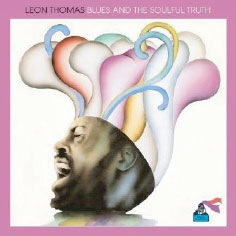
The late Leon Thomas was a vocalist who has proven to be influential among jazz and blues saxophonists, guitarists, and pianists, who've admitted their debt to his innovation. However, though there are many vocalists who have benefited from his style as well, he is seldom acknowledged for his highly original -- and idiosyncratic -- contribution to them. One can only speculate as to why, though Thomas' full-throated style which employed everything from yodels to Joe Turner-ish growls and shouts may have been too wide for anyone to grasp in its entirety without overtly sounding as if they were aping him. Blues and the Soulful Truth is among the artist's most enduring performances, either as a leader or sideman. There is his trademark, otherworldly modal improvisation on Gabor Szabo's exotica classic "Gypsy Queen," the deep, greasy gutbucket, funky blues of "Let's Go Down to Lucy" and "L-O-V-E," and the traditional tune "C.C. Rider" -- though Thomas' arrangement is anything but -- among a lengthy, eight-song set. Perhaps the most revealing examples of his singularity is his ability to interpret a song like John Lee Hooker's "Boom, Boom" as funky, jazzed-out, angular R&B -- enabled mightily by the saxophone stylings of Pee Wee Ellis and the criminally under-appreciated pianism of Neal Creque and the wild violin of John Blair -- after coming out of a pop-oriented soul tune such as "Love Each Other," written with a groove prevalent among commercial jazz and R&B recordings of the time, both sounding sincere, authentic, and completely full of the singer's presence. Indeed, on the aforementioned "Gypsy Queen" or his own "Shape Your Mind to Die," Thomas inhabits his material fully, as if nobody ever had ever sung or heard these songs and would ever sing them again. Also, the production innovation and percussive touches many of these tunes have yet to be repeated (Pharoah Sanders, Thomas' previous employer who introduced the singer to the world, adopted some of the artist's percussive techniques permanently), like the firecrackers raining against Airto Moreira's drums and Larry Coryell's ethereal guitar riffs, or the use of a "prepared" vibraphone and coat hangers in "China Doll," as they slip against the singer's wail and moan, and the elegant stick and brushwork of Bernard "Pretty" Purdie. In sum, Blues and the Soulful Truth (Which does echo Oliver Nelson's Blues and the Abstract Truth in vision as well as title), is a tour through the depth and dimension of Thomas' mind-blowing abilities as a singer in a wide range of African American musical traditions, proving at the time, and now again, that he was far more than a free jazz singer. Indeed, the artist not only was a stylist of originality, but a composer, arranger, ethnomusicologist, and a singer of startling beauty and power -- no matter the song. This album is a singular achievement, even among the fine recordings in Thomas' own catalogue, and should be considered first by those curious enough to look into his work -- you won't be disappointed no matter what you find, but this one will take you places you never anticipated going. ~ Thom Jurek
読み込み中にエラーが発生しました。
画面をリロードして、再読み込みしてください。