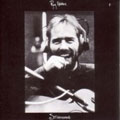
Rolling Stone (p.72) - "STORMCOCK is still eccentric majesty, four long songs of challenge, mission and desire, sung by Harper in dark-tenor whispers and keening multitracked chorales..."
Spin (p.98) - 4 stars out of 5 -- "[A] poetic four-part suite that merged the personal and political..."
Entertainment Weekly (p.136) - "Harper's otherworldly swirl of incisive lyricism, quick-silver melody, and gorgeous guitar technique is absolutely his own." -- Grade: A
Q (1/95, p.270) - 4 Stars - Excellent.
Uncut (p.81) - 5 stars out of 5 -- "A small stellar cast including Jimmy Page and string arranger David Bedford set about recreating the conflicts inside of Harper's head, with meditations on time, war, and self-knowledge."
Down Beat (p.71) - 4.5 stars out of 5 -- "STORMCOCK is rightly considered a dramatic high point in a sterling recording career....STORMCOCK is progressive in its sensibility and elegantly spare in instrumentation."
Dirty Linen (p.53) - "[T]he disc consists of four pieces that form an ambitious song cycle that seems to aspire to a universal expression of the human experience."
Mojo (Publisher) (p.75) - "[W]ith string arranger David Bedford in tow he created his masterpiece."
Blender (Magazine) (p.84) - 4 stars out of 5 -- "[With] obliquely scathing lyrics about authoritarianism and superstition, sung with tender fury and framed by delicate but muscular guitar."
Signal To Noise (p.58) - "Harper creates a feeling of grandeur that evokes the art-rock suites of his day..."
Rovi
Roy Harper achieved some acclaim with releases like his debut, Sophisticated Beggar, and Flat Baroque and Berserk, but 1971's Stormcock was his first effort that was a fully realized success. Even though all four long songs on the record were arguably superior in subsequent live versions, this is one of only a handful of Harper's albums that has no weak cuts. "Hors d'Oeuvres" had been previewed two years earlier in a faster incarnation, but this version is pleasingly lethargic in a way much like Pink Floyd's "Fearless." "The Same Old Rock" is an extended musical poem about the narrow-mindedness of organized religion and features several movements, including one of Jimmy Page's best solos, even though the notes list Page as S. Flavius Mercurius. After the strangely melodic "One Man Rock and Roll Band," the album ends with the grand "Me and My Woman." This version, while slower than the definitive live take from Flashes From the Archives of Oblivion, features lush orchestration by David Bedford. All four lyrics could stand on their own, showing Harper's vision to be much more profound than the typical stoned poet. His musicianship on acoustic guitar is revelatory, at once thoughtful and hard-edged. Stormcock, in fact, epitomized a hybrid genre that had no exclusive purveyors save Harper -- epic progressive acoustic. In this style, Harper amalgamated the best elements of associates Pink Floyd, Led Zeppelin, and folk artists like Bert Jansch into a winning stew of thought-provoking acoustic music. Harper dabbled in this style with mostly good results for the rest of his career, but never again would one of his albums exclusively have these type of songs on it. Stormcock represents a truly original vision comprised of oft-heard parts rarely assembled and therefore is on par with other heavyweights from the class of 1971 such as Led Zeppelin IV or Meddle. ~ Brian Downing
Rovi