| フォーマット | CDアルバム |
| 発売日 | 1994年11月22日 |
| 国内/輸入 | 輸入 |
| レーベル | Shanachie Records |
| 構成数 | 1 |
| パッケージ仕様 | - |
| 規格品番 | SHA64058 |
| SKU | 016351645821 |
構成数 : 1枚
合計収録時間 : 01:02:53
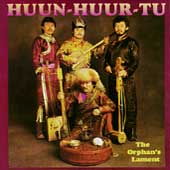
Huun-Huur-Tu: Kaigal-Ool Khovalyg (vocals, igil, jew's harp, doshpulur, khoomei, kargyraa), Anatoli Kuular (vocals, bizaanchi, jew's harp, doshpulur, igil, ediski), Sayan Bapa (vocals, doshpulur, marinhuur, guitar), Alexander Bapa (tungur, dazhaanning khavy, amarga, vocals, bells).
Additional personnel: Mergen Mongush (vocals).
Engineers: David Wonsey (tracks 1-6, 8, 9, 11-16); Gennady Papin (tracks 7, 10).
Recorded at Quad Recording Studios, New York and MosFilm Studios, Moscow, Russia. Includes liner notes by Ted Levin.
To accompany their Tuvan "throat singing," the members of Huun-Huur Tu use a combination of traditional Tuvan instruments and their own embellishments. Among them are the dazhaanning khavy, a rattle made from a bull scrotum and sheep kneebones; the amarga, a deer horn; and the ediski, a piece of birch bark pressed between the lips to imitate bird calls.
Personnel: Sayan Bapa (vocals, guitar); Kaigal-ool Khovalyg (vocals, harp, igil); Anatoli Kuular (vocals, harp); Mergen Mongush (vocals); Alexander Bapa (horns, drums, bells).
Recording information: Mosfilm Studios, Moscow, Russia; Quad Recording Studios, New York, NY.
Unknown Contributor Role: Alexander Bapa.
From the first track, their second album, Orphan's Lament grabs your attention with "Prayer" -- the deep, unearthly, sounds of Tibetan Lamaist chant. Next they move to khoomei singing. Known in the West as "throat singing," the performer produces two or more high- and low-pitched tones simultaneously. The resulting sound -- somewhat eerie, somewhat haunting -- is a combination somewhere between the sounds of a long whistle and a Jew's harp.
But Huun Huur Tu also adds new elements to the traditional sounds of Tuvan music. In addition to the igil, a two-stringed horsehead fiddle played with a bow, and the khomuz, a Jew's harp, (both traditional instruments) the group has incorporated percussion -- not a usual device in Tuvan music. Their use of a large goat-skin drum, generally reserved for shamanistic rituals, gives a rhythm to their music, making it very appealing to a Western ear. Similarly, their use of pouch rattle (made from a bull's scrotum filled with sheep knucklebones) adds a beat.
The fact Huun Huur Tu plays together, as a group, is itself unusual. Not content to blindly follow traditional Central Asian folk music, Huun Huur Tu's four, sometimes five, performers create an ensemble that offers a complex, fascinating, and harmonious mixture. ~ Robert Walker
録音 : ステレオ (Studio)
読み込み中にエラーが発生しました。
画面をリロードして、再読み込みしてください。