Jazz
CDアルバム

販売価格

¥
2,490
税込
還元ポイント

販売中

お取り寄せ
発送目安
7日~21日

お取り寄せの商品となります

入荷の見込みがないことが確認された場合や、ご注文後40日前後を経過しても入荷がない場合は、取り寄せ手配を終了し、この商品をキャンセルとさせていただきます。

フォーマット CDアルバム
発売日 2013年05月29日
国内/輸入 輸入
レーベルBureau B
構成数 1
パッケージ仕様 -
規格品番 BB130CD
SKU 4047179749923

構成数 : 1枚
合計収録時間 : 00:42:33
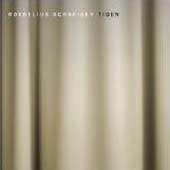
On their follow-up to Stunden, ambient and experimental music legend Hans-Joachim Roedelius and electronic music producer and multi-instrumentalist Stefan Schneider (To Rococco Rot, Kreidler), expand upon the musically and texturally elastic explorations of time on their debut. This isn't accomplished by stretching out the previous record's languid approach, which let compositions merely float with sonic adornment. While Roedelius' piano is never less than beautiful, each note is articulated precisely; played with only enough force to illuminate the particular voice each tune needs. Schneider's electronics are more assertive, a tad more dissonant, and more colorful here. There are more beats (albeit wonderfully elegant, often subtle ones), more textures, and most importantly, more direct engagement between players inside (mostly) shorter compositions. A prime example is "Frankly," where Schneider's multivalent stuttered rhythms (one of which acts as a melody line) are answered first by a wonky synth, then by a bassline that sounds like a rubbed tabla; they're colored, more than a minute in, by Roedelius' repetitive piano lines that sound almost like a gentle chant. "Indie Woogie" is a companion piece to Stunden's "Single Boogie"; it relies more on Schneider's droning, almost sinister lines to introduce Roedelius' spare, softly inserted chords and single notes, rather than on the near Motorik rhythms of its predecessor. On "Graden," the pianist takes center stage; elliptically exploring a series of brief themes as Schneider colors them in with the implied sounds of rubbed gongs, chimes, and synth bass and blips that bind the piano to the earth. Also using electronics to offer an Eastern modality in contrast to Roedelius' distinctly Western lines, geography and history are given voices. The very next track, "Toast," is all pulse, wave forms, and loops. "Hohner Omen" finds Roedelius on electric piano, playing a piece that walks the line between lithe, jazzy swing and American trad pop, while Schneider's additions of reverb, an intermittent bassline, and gauzy synth washes extend its reach past the confines of history and musical tradition. "Unsettled Hours" is one of album's true standouts, in that through its use of fluttering, airy, sub-dub bass loops, what sounds like a koto, oscillating waves, and of course Roedelius' crystalline piano, it explores time from inside-out -- its relationship to the physical world lies not in the spaces between sounds, but in what sounds fill those spaces and join them together. Tiden may be listened to passively and with great enjoyment, but to do so would be to miss its sense of invention and adventure. ~ Thom Jurek

  1. 1.[CDアルバム]
    1. 1.
      Umstunden
    2. 2.
      Indie Woogie
    3. 3.
      Frankly
    4. 4.
      Whose Contact?
    5. 5.
      Nuance
    6. 6.
      Graden
    7. 7.
      Toast
    8. 8.
      Hohner Omen
    9. 9.
      Mild
    10. 10.
      Unsettled Hours
    11. 11.
      Bald
    12. 12.
      Anderer
    13. 13.
      Pedal Piece

作品の情報

メイン

商品の紹介

On their follow-up to Stunden, ambient and experimental music legend Hans-Joachim Roedelius and electronic music producer and multi-instrumentalist Stefan Schneider (To Rococco Rot, Kreidler), expand upon the musically and texturally elastic explorations of time on their debut. This isn't accomplished by stretching out the previous record's languid approach, which let compositions merely float with sonic adornment. While Roedelius' piano is never less than beautiful, each note is articulated precisely; played with only enough force to illuminate the particular voice each tune needs. Schneider's electronics are more assertive, a tad more dissonant, and more colorful here. There are more beats (albeit wonderfully elegant, often subtle ones), more textures, and most importantly, more direct engagement between players inside (mostly) shorter compositions. A prime example is "Frankly," where Schneider's multivalent stuttered rhythms (one of which acts as a melody line) are answered first by a wonky synth, then by a bassline that sounds like a rubbed tabla; they're colored, more than a minute in, by Roedelius' repetitive piano lines that sound almost like a gentle chant. "Indie Woogie" is a companion piece to Stunden's "Single Boogie"; it relies more on Schneider's droning, almost sinister lines to introduce Roedelius' spare, softly inserted chords and single notes, rather than on the near Motorik rhythms of its predecessor. On "Graden," the pianist takes center stage; elliptically exploring a series of brief themes as Schneider colors them in with the implied sounds of rubbed gongs, chimes, and synth bass and blips that bind the piano to the earth. Also using electronics to offer an Eastern modality in contrast to Roedelius' distinctly Western lines, geography and history are given voices. The very next track, "Toast," is all pulse, wave forms, and loops. "Hohner Omen" finds Roedelius on electric piano, playing a piece that walks the line between lithe, jazzy swing and American trad pop, while Schneider's additions of reverb, an intermittent bassline, and gauzy synth washes extend its reach past the confines of history and musical tradition. "Unsettled Hours" is one of album's true standouts, in that through its use of fluttering, airy, sub-dub bass loops, what sounds like a koto, oscillating waves, and of course Roedelius' crystalline piano, it explores time from inside-out -- its relationship to the physical world lies not in the spaces between sounds, but in what sounds fill those spaces and join them together. Tiden may be listened to passively and with great enjoyment, but to do so would be to miss its sense of invention and adventure. ~ Thom Jurek|
Rovi

メンバーズレビュー

レビューを書いてみませんか?

読み込み中にエラーが発生しました。

画面をリロードして、再読み込みしてください。