| フォーマット | CDアルバム |
| 発売日 | 2001年07月10日 |
| 国内/輸入 | 輸入 |
| レーベル | Tinder Records |
| 構成数 | 1 |
| パッケージ仕様 | - |
| 規格品番 | 861002 |
| SKU | 789428610021 |
構成数 : 1枚
合計収録時間 : 00:47:55
Sawt El Atlas includes: Kamel El Habchi, Mounir Mirghani (vocals); Abdelkrim El Habchi (keyboards); Adhil Mirghani (derbouki); Khalid El Habchi (drums); Samir Mirghani (congas, percussion).
Additional personnel includes: Natacha Atlas.
Recorded at Zarma Studios, Paris, France and Sot El Hob Studios, Cairo, Egypt.
Personnel: Alain Toko, Manuel Soto (guitar); Nabil Khalidi (oud); Farhat Bouallagui, Herve Cavelier (violin); Vincent Segal (cello); Marc Smith (trombone); Patrick Goraguer (keyboards, programming); Karim Ziad, Roger Biwandu (drums); Mohsein Chentouf, Sydney Thiam (percussion); Sodi (programming).
Audio Mixers: Ian Caple; Carmen Rizzo.
Audio Remixer: Volodia .
Recording information: Sot El Hob, Cairo, Egypt; Studio Zorrino; Stuido Zorrino; Zarma, Paris, France.
Unknown Contributor Role: Jean-Marc Apap.
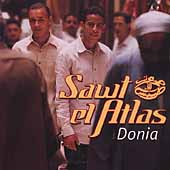
France is a hotbed of modern Arabic pop music. Middle Eastern and North African immigrants have been moving to France for a long time, and Paris is full of studios that cater to Arabic artists. Sawt el Atlas, one of the many Arabic-French bands that has recorded in Paris, bring a variety of influences to their second album, Donia -- a solid CD that came out in France in 1999 but wasn't released in the U.S. until 2001. The leaders of Sawt el Atlas are of Moroccan descent, but their music isn't traditional North African music. Rather, Donia combines North African influences (Moroccan, Algerian, and Egyptian) with everything from funk and reggae to Latin music. Much of the material is rai -- an infectious style of North African pop that was invented in Algeria -- but unlike rai stars who live in Algeria, Sawt el Atlas provide a lot of French lyrics. Most of the CD's lyrics are in either French or Arabic; "Andalucia," however, is performed in Spanish and combines Spain's nuevo flamenco style with North African and Middle Eastern elements. The song is a very infectious acknowledgment of the Spanish/Arabic connection; before the Spanish Inquisition, Spain had an Islamic community -- and the musical influence of Spain's Muslims remained long after they were either killed or violently forced out of the country. That's why you can still hear some Middle Eastern influence in Spanish music after all these centuries. "Andalucia" is the essence of multiculturalism, and the same thing can be said about the rest of the album. Boasting a very wide variety of influences, Donia is as rewarding as it is unpredictable. ~ Alex Henderson
録音 : ステレオ (Studio)
読み込み中にエラーが発生しました。
画面をリロードして、再読み込みしてください。