各パート奏者の巧さが際立つヴォルフガング・レンツ編
クラリネットによるファンファーレで始まる「展覧会の絵」
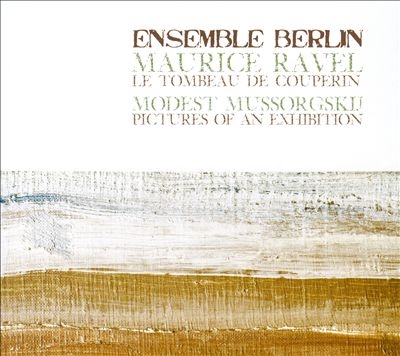
アンサンブル・ベルリンによる「クープランの墓」、「展覧会の絵」の登場。このアンサンブルの編成にあわせた編曲を手掛けたのは、アウグスブルク・フィルハーモニー管弦楽団のオーボエ奏者ヴォルフガング・レンツ。彼は、長年の奏者としての経験を活かしながら、アンサンブル・ベルリンのためにこれらの作品の編曲を手掛けました。他にシューベルトの歌曲集やシューマンのピアノ曲などを違う編成に編曲しています。
「クープランの墓」では、ラヴェル自身の管弦楽編曲版では除かれた「フーガ」「トッカータ」の楽章が含まれているのがポイント。各楽器の音色も声部間の受け渡しも見事、急速なトッカータでは各楽器の一音一音の発音が極めてクリアで、この作品をピアノで学んでいる方には曲の新しい側面を発見できるかもしれません。
「展覧会の絵」は、冒頭「プロムナード」の有名なファンファーレがクラリネットで登場。続く各曲も楽器選択の妙が活きており、ラヴェル編の大規模なものとは一味違い、和音進行や曲の雰囲気を親密な雰囲気で楽しめます。管弦楽というより室内楽といったほうがぴったりくるかもしれない、興味深いものとなっております。メンバー全員の力の均整もとれていて、しかもそのレベルが高いことを実感できる、文句無しの出来栄えといえるでしょう。
キングインターナショナル
発売・販売元 提供資料(2010/07/20)
Something that the two pieces on this album have in common is that they were originally written for piano and Ravel orchestrated them both, except for a few of their movements. Mussorgsky's Pictures at an Exhibition is probably even more familiar in Ravel's brilliant orchestration than in its original form. The French composer must have felt that two of the six movements of Le tombeau de Couperin, Fugue and Toccata, were best left in their original form since he chose not to include them in the orchestral suite. Wolfgang Renz was bold to tackle them in his orchestration of the suite for chamber ensemble, a group made up of a wind quintet and string sextet, but their delicate textures do in fact work here where they might well have been cumbersome if played by a full orchestra. Overall, Renz's orchestrations, while frequently following Ravel's lead, offer inventive solutions to the questions of transcribing piano music for a mid-sized chamber ensemble. He's more successful in the Ravel than the Mussorgsky, due to the character of the music. Le tombeau de Couperin evokes the elegance of the French Baroque with nimble lightness and filigreed ornamentation, and the timbral variety and transparency of this ensemble seem ideally suited for a transcription of this music. The Mussorgsky piano suite, on the other hand, has a far wider dynamic and textural range; there are movements -- "The Great Gate of Kiev," for example -- for which the grandeur and volume of a full orchestra are needed. Especially since the Ravel orchestration is so familiar, this chamber version sounds puny in comparison. Most of the other movements work well, though. Ensemble Berlin, a group founded in 1999, plays with subtlety and obvious delight in the music. The oboe playing is not entirely consistent, and its sluggishness at some points in the Prelude to the Ravel suite bogs down an otherwise delightful performance. The sound is clean, detailed, and vibrant.
Rovi