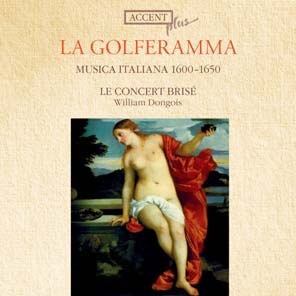
クラシック
CDアルバム

2本のコルネットのためのイタリアの音楽集

0.0

販売価格

¥
2,090
税込
還元ポイント

在庫状況 について

フォーマット CDアルバム
発売日 2010年06月08日
国内/輸入 輸入
レーベルAccent Plus
構成数 1
パッケージ仕様 -
規格品番 ACC10402
SKU 4015023104020

構成数 : 1枚
合計収録時間 : 01:12:53
録音 : ステレオ (---)

『2本のコルネットのためのイタリアの音楽集』
【曲目】
ニコロ・コッラディーニ:ラ・ゴルフェランマ
フランチェスコ・ロニョーニ:
 2つのコルネットのためのカンツォン第2番(1626)、来たれ主よ、2つのコルネットのためのカンツォン第1番(1626)
サロモーネ・ロッシ:
 ソナタ「ラ・ヴィエナ」(1623)、ソナタ「ラ・ロマネスカ(1626]、ソナタ「ラ・ベルガマスカ」(1642)
ジュゼッペ・スカラーニ:2声のソナタ第3番
チプリアーノ・デ・ローレ/ジョヴァンニ・バッティスタ・ボヴィチェッリ編:ふたたび別れて
ジョヴァンニ・バッティスタ・リッチオ:ソプラノ2声のエコーのソナタ
ジュゼッペ・スカラーニ:2声のソナタ第5番
ジョヴァンニ・ガブリエリ:カンツォン 第1旋法
ジョヴァンニ・ピエルルイジ・ダ・パレストリーナ/ジョヴァンニ・バッサーノ編:あなたは完全に美しい
ジュゼッペ・スカラーニ:2声のソナタ第1番
ダリオ・カステッロ:ソプラノ2声のソナタ第2番、ソプラノ2声のソナタ第1番
ジョヴァンニ・バッティスタ・リッチオ:立ちつくすマリア(1617)
ジョヴァンニ・ガブリエリ:エコーのカンツォン 第12旋法
【演奏】
ル・コンセール・ブリゼ
ウィリアム・ドンゴワ(Cor、Rec)、濱田芳道(Cor、Rec)、カーステン・ローフ(Org,Cemb)
ピエール=アラン・クレルク(Org、レガール)
【録音】
1998年10月
原盤:Carpe Diem

  1. 1.[CDアルバム]
    1. 1.
      Sonata "La Golferamma" a due cornetti overo violini
    2. 2.
      Canzon seconda a due cornetti
    3. 3.
      Veni Domine per soprano overo tenore
    4. 4.
      Canzon prima, 1626 a due cornetti overo violini
    5. 5.
      Sonata detta "La Viena", 1623 a due violini?
    6. 6.
      Sonata sopra "La Romanesca", 1626 a due violini?
    7. 7.
      Sonata sopra "La Bergamasca", 1642 a due violini?
    8. 8.
      Sonata terza a due canti
    9. 9.
      Anchor che col partir per canto
    10. 10.
      Sonata, 1613 a doi soprani in echo proposta
    11. 11.
      Sonata quinta a due canti
    12. 12.
      Canzon primi toni a otto voci
    13. 13.
      Tota pulchra es Per soprano
    14. 14.
      Sonata prima a due canti
    15. 15.
      Sonata seconda a due soprani
    16. 16.
      Sonata prima a due soprani
    17. 17.
      Maria stabat, 1617 a due tenore
    18. 18.
      Canzon duodecimi toni in echo a 10 voci

作品の情報

商品の紹介

日本を代表するコルネット&リコーダー奏者、濱田芳道と名手ウィリアム・ドンゴワによる2本のコルネットによる二重合奏形式の作品集。スイス、にある聖ローラン教会とヌーシャテル博物館で録音されています。
キングインターナショナル
発売・販売元 提供資料(2010/04/16)

Some of the continuo parts on this disc of early seventeenth century Italian organ music are played on small organs. These have been blown manually (by hardworking volunteers), and the booklet notes brag about "noises inherent in the movements of the bellows: rustling of leather, creaking of ropes on pulleys...All this sometimes resembles the groaning and creaking of a ship..." It's that kind of a disc -- low-tech, noisy, and extremely enthusiastic, as far as can be imagined form the flashy brass-ensemble performances that are the norm for the instrumental music of this general time. The pieces here are mostly for two melody parts, plus continuo. Instruments were largely unspecified, but here they are mostly played on cornetts -- not the modern cornet, but an early curved or even snake-like wind instrument that, like the small organs, brings with it a complement of breath noise and other sounds external to that of the apparatus itself. The music is the stuff of Giovanni Gabrieli and of the instrumental interludes in Monteverdi's larger works -- phrases in free rhythms, festooned with flourishes and various expressive devices. The terminology of genres during this period was unstable, and the booklet gives a helpful way of thinking about the procedures composers used as instrumental music began to emerge as an independent thing: a performer-composer (such as the cast of virtual unknowns represented here) might make "diminutions" of an existing tune, filling in its spaces with fast notes and thus creating an instrumental counterpart for the new vocal virtuosity of opera. The composer might exploit the "concerto" style, which in this context meant creating contrasting blocks of sound (the words "concerto" and "concertato" carry the sense of distinct groups joining together). Or the composer might adapt a polyphonic vocal work, making one or two of its lines into instrumental leads and filling in the rest with continuo. Examples of all three types are heard here, and listeners will feel more in touch with the music's creative cutting edge than they would if presented with a dry discussion of what was classified as a sonata or a canzona during this period. Hear Giovanni Battista Riccio's Sonata a doi soprani in echo proposta of 1613 for an example of the "concerto" type. The playing of Le Concert Brise and its leads William Dongois and Yoshimichi Hamada is relaxed and lively, whether on cornetts, on the very gentle cornetto muto (muted cornett), or on recorder. The variety of continuo instruments is also unusual and of great interest. It includes a regal, or, as they say here, regals -- the word "regal" referred both to a small portable organ and to a specific type of stop, so it could be made plural. If you've never heard one, sample the Riccio sonatas or Salomone Rossi's Sonata sopra "La bergamasca," track 7, to hear its delightful buzzing sound. "La golferamma" is the title of the first work on the album, a sonata by Nicolo Corradini; the annotators do not see fit to translate this rather odd term, but perhaps it means "the woman who lives by the gulf." As a whole, this recording brings this almost unknown and rather forbidding music alive, and it represents the very best kind of results that can be generated from the revival of old instruments and from immersion in their unique sounds.
Rovi

メンバーズレビュー

レビューを書いてみませんか?

読み込み中にエラーが発生しました。

画面をリロードして、再読み込みしてください。