| フォーマット | CDアルバム |
| 発売日 | 2010年01月12日 |
| 国内/輸入 | 輸入 |
| レーベル | Collectors' Choice |
| 構成数 | 1 |
| パッケージ仕様 | - |
| 規格品番 | CCM2061 |
| SKU | 617742206128 |
構成数 : 1枚
合計収録時間 : 01:22:29
Audio Remixer: Ted Carfrae.
Liner Note Author: Mike Ragogna.
Recording information: Electric Lady Studios, New York; Quadraphonic Studios, Nashville; Sound Recorders; United Recording Studios, Los Angeles.
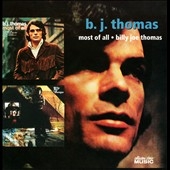
Unlike its two predecessors, 1971's Most of All isn't built upon Bacharach/David songs -- there is "(They Long to Be) Close to You," recently popularized by the Carpenters, but no new songs written expressly for B.J. Thomas. Instead, there's a shift toward solid, generic professional writers who could write toward the sound of the times without quite delivering memorable tunes. That said, they're hardly unpleasant tunes, but then again, the point of Thomas' career at this point was to be pleasant, and in that regard Most of All succeeds very well, trumping Everybody's Out of Town. Part of its success is that the songs are designed to be pleasing soft rock: there's none of Bacharach/David's neo-vaudeville; instead, there's subdued symphonic Joe South soul in "No Love at All" and a bit of trippy post-hippie pop in Chip Taylor's "Circle Round the Sun," sounds that fit well with the dripping sentiments of "I Don't Know Any Better." Thomas never pushes forward on this material, he settles into its shag carpet, and if there's not much distinction in that sound there is at least a bit of period comfort.
Billy Joe Thomas, the last of B.J. Thomas' LPs for Sceptre Records, is perhaps the most ambitious of his entire stint at the label. There are no covers of current hits and the material is all from heavy-hitters: Mark James, John Sebastian, Jimmy Webb, Barry Mann & Cynthia Weil, Carole King, and Stevie Wonder chief among them. There's more ambition -- as well as a fair amount of pomp and circumstance -- within the arrangements, and he sees a few of his writers sitting in on their respective songs, with Webb playing piano on "A Song for My Brother" and Stevie Wonder blowing harp on "Happier Than the Morning Sun." All this, along with a production that leans as heavily on progressive trippy rock accents as it does on soft lulling textures, gives the album a heavier vibe than any other B.J. Thomas record: it's an album designed to make him seem like a singer/songwriter like Elton John. The ambition is admirable even if it doesn't quite gel: the songs tend to rely on their lyrics, which doesn't befit such grand arrangements or Thomas' skills, as he doesn't dig into the heart of a song, he sells the contours of the melody. But this disconnect is what makes the record interesting -- it may not work, but it has a scope that dwarfs Thomas' other records, and its halting blend of progressive pop and MOR is a period curio worth investigating once. ~ Stephen Thomas Erlewine
エディション : Reissue
読み込み中にエラーが発生しました。
画面をリロードして、再読み込みしてください。