オンラインキャンペーン価格クラシック スペシャルプライス15%オフ
クラシック
CDアルバム

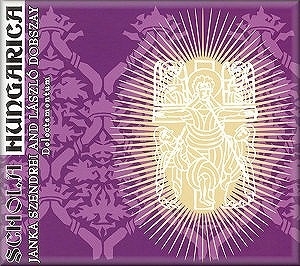
デレクタメンタム~グレゴリオ聖歌とデュファイ作品集

0.0

販売価格

¥
3,190
税込

¥ 479 (15%)オフ

¥
2,711
税込
還元ポイント

販売中

お取り寄せ
発送目安
7日~21日

お取り寄せの商品となります

入荷の見込みがないことが確認された場合や、ご注文後40日前後を経過しても入荷がない場合は、取り寄せ手配を終了し、この商品をキャンセルとさせていただきます。

フォーマット CDアルバム
発売日 2022年02月25日
国内/輸入 輸入
レーベルBMC (Budapest Music Center)
構成数 1
パッケージ仕様 -
規格品番 BMCCD140
SKU 5998309301407

構成数 : 1枚
合計収録時間 : 01:00:29

【曲目】
賛美歌:Jesu nostra refectio
Antiphon:Sapientia aedificavit
Responsory:Quicumque manducaverit
Responsory:主イエスはその夜
Melchisedec rex Salem
Antiphon:天使の糧

デュファイ:サンクトゥス、アヴェ・ヴェルム・コルプス
Reading from the Sermons of St. Thomas Aquinas I.
Responsory:Verbum vitae carni conjungitur
Sermon II.
Responsory:Panis oblatus caelitus
Sermon III.
テ・デウム

デュファイ:パンジェ・リングァ・グローリオシ
Introit:良い麦で養ってくださる
Epistle:Ego enim accepi
Gradual:Oculi omnium
Alleluia:Caro mea
デュファイ:ラウダ・シオン
Offertory:Sacerdotes incensum
Communion:Quotiescumque manducabitis

【演奏】
スコラ・フンガリカ
ヤンカ・センドレイ(指揮)
ラースロー・ドブサイ(指揮)

【録音】
2007年6月18日-22日

  1. 1.[CDアルバム]
    1. 1.
      Jesu nostra refectio, hymn
    2. 2.
      Sapientia aedificavit, antiphon
    3. 3.
      Quicumque manducaverit, responsory
    4. 4.
      Dominus Jesus in qua nocte, responsory
    5. 5.
      Melchisedec rex Salem, antiphon with trope
    6. 6.
      Angelorum esca, antiphon
    7. 7.
      Sanctus Ave verum corpus and Agnus Custos et pastor, for 4 voices
    8. 8.
      Summa Theologica, book~Reading from the Sermons of St. Thomas Aquinas, Sermon I
    9. 9.
      Verbum vitae carni conjungitur, responsory
    10. 10.
      Summa Theologica, book~Reading from the Sermons of St. Thomas Aquinas, Sermon II
    11. 11.
      Panis oblatus caelitus, responsory
    12. 12.
      Summa Theologica, book~Reading from the Sermons of St. Thomas Aquinas, Sermon III
    13. 13.
      Te Deum laudamus
    14. 14.
      Pange lingua gloriosi [i], hymn for 3 voices
    15. 15.
      Cibavit eos, introit
    16. 16.
      Scripture Reading, Bible~Ego enim accepi (First Epistle of Paul to the Corinthians 11:23)
    17. 17.
      Occuli omnium, gradual in mode 7
    18. 18.
      Caro mea vere est cibus, alleluia in mode 7
    19. 19.
      Lauda Sion Salvatorem, sequentia (Feast of Corpus Christi)
    20. 20.
      Offertorium Sacerdotes incensum
    21. 21.
      Quotiescumque manducabitis panem hunc

作品の情報

商品の紹介

グレゴリオ聖歌とデュファイの作品を組み合わせることによって、デュファイの作品の特徴をより際立たせています。
スコラ・フンガリカの澄み切った歌声が響き渡り、聞き手の心を揺さぶるような美しさです。
東京エムプラス
発売・販売元 提供資料(2021/12/21)

This Hungarian disc of chant certainly qualifies as arcane. Start with the title, Delectamentum, which the booklet notes (in Hungarian, French, and English, with chant texts in Latin, Hungarian, and English) assure us would have had a triple meaning within a medieval context. The booklet goes on to use words like "fashionable" and "sentimental" in relation to specific chants, and these words are obviously being used in ways intended for those whose familiarity with chant runs deep. Those individuals, and other listeners who are willing to buckle down and figure out just what is going on here, may nevertheless find the program intriguing. The idea in a nutshell seems to be this: the ensemble Schola Hungarica and annotator Laszlo Dobszay have assembled a group of chants that medieval Hungarian singers observing the feast of Corpus Christi might have picked for themselves. That enterprise involves several aspects. First, the music is conditioned by the fact that the feast of Corpus Christi took quite a while to find its place within the annual cycle of Catholic observance. Chief among those who helped codify it, in fact, was St. Thomas Aquinas, whose words are chanted here in a reciting-tone style (track 8). What that means is that the chants on the disc were mostly newly composed in the medieval era rather than those that had been handed down through centuries of oral tradition. These medieval chants have their own flavor; they seem more closely connected to their texts, also often new or at least troped, than do the classic Gregorian chants. Singers in Hungary might have also chosen material from Eastern European repertories; although by no means all the chants here are from Eastern Europe, several items will be unfamiliar from a Western perspective. Finally, with the inclusion of three motets by Guillaume Dufay, the program places polyphony within the context of the chant that would still, in the middle of the fifteenth century, often have surrounded it. This isn't so much an "authentic" performance of chant -- the singers sound like they are mixed in gender -- as an investigation of what a medieval chant repertory might have sounded like. Delectable? Only if you know what you're doing. Interesting and informative? Definitely.
Rovi

メンバーズレビュー

レビューを書いてみませんか?

読み込み中にエラーが発生しました。

画面をリロードして、再読み込みしてください。