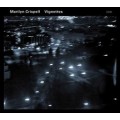
Jazz
CDアルバム

販売価格

¥
3,190
税込
還元ポイント

販売中

お取り寄せ
発送目安
2日~7日

お取り寄せの商品となります

入荷の見込みがないことが確認された場合や、ご注文後40日前後を経過しても入荷がない場合は、取り寄せ手配を終了し、この商品をキャンセルとさせていただきます。

フォーマット CDアルバム
発売日 2008年04月11日
国内/輸入 輸入
レーベルECM
構成数 1
パッケージ仕様 -
規格品番 ECM2027
SKU 602517452770

構成数 : 1枚
合計収録時間 : 01:08:13

  1. 1.[CDアルバム]
    1. 1.
      Vignette I

      アーティスト: Marilyn Crispell Quartet

    2. 2.
      Valse Triste

      アーティスト: Marilyn Crispell Quartet

    3. 3.
      Cuida Tu Espiritu

      アーティスト: Marilyn Crispell Quartet

    4. 4.
      Gathering Light

      アーティスト: Marilyn Crispell Quartet

    5. 5.
      Vignette II

      アーティスト: Marilyn Crispell Quartet

    6. 6.
      Vignette III

      アーティスト: Marilyn Crispell Quartet

    7. 7.
      Vignette IV

      アーティスト: Marilyn Crispell Quartet

    8. 8.
      Vignette V

      アーティスト: Marilyn Crispell Quartet

    9. 9.
      Sweden

      アーティスト: Marilyn Crispell Quartet

    10. 10.
      Once

      アーティスト: Marilyn Crispell Quartet

    11. 11.
      Axis

      アーティスト: Marilyn Crispell Quartet

    12. 12.
      Vignette VI

      アーティスト: Marilyn Crispell Quartet

    13. 13.
      Vignette VII

      アーティスト: Marilyn Crispell Quartet

    14. 14.
      Ballade

      アーティスト: Marilyn Crispell Quartet

    15. 15.
      Time Past

      アーティスト: Marilyn Crispell Quartet

    16. 16.
      Stilleweg

      アーティスト: Marilyn Crispell Quartet

    17. 17.
      Little Song for My Father

      アーティスト: Marilyn Crispell Quartet

作品の情報

メイン
アーティスト: Marilyn Crispell QuartetMarilyn Crispell

商品の紹介

28歳の時に聴いたコルトレーンの『至上の愛』でそれまで演奏していたクラシックからニュー・ジャズに転向したフィラデルフィア出身の女性ピアニスト、マリリン・クリスペル初のソロ・アルバム。キース・ジャレット、チック・コリア、ポール・ブレイ、スティーヴ・キューンなどがこれまでリリースしてきたECMを代表するソロ・ピアノ名盤に新たに加わるのがこの作品!クリスペル自身による新曲、友人のアルヴェ・ヘンリクセン、ジェイナ・ネルソンからの提供曲、さらにフリーなプレイも堪能できるポエティックでリリカルな作品。これまでのトリオ作品では見出せなかった新境地がここに!

タワーレコード(2009/04/08)

ianist and composer Marilyn Crispell made her debut with ECM Records in 1997 with the stellar Nothing Ever Was, Anyway: The Music of Annette Peacock. Recorded with bassist Gary Peacock and drummer Paul Motian, with a guest appearance by the subject herself on one track, it was the first of three trio recordings she made for the label. Amaryllis followed in 2001, with the same lineup, which was in turn followed by Storyteller, where Mark Helias replaced Peacock, and the program centered on tunes by Motian with a couple of her own compositions included as well. Vignettes marks Crispell's solo piano debut with the label and, after listening through a couple of times, one wonders what took her so long. The pianist on this recording barely resembles the fiery player and improviser who accompanied Anthony Braxton for many years, or the musician who led her own intense ensembles or played hourlong improvised solos that had their roots in the physical approaches of Cecil Taylor and McCoy Tyner. Yet, there is a direct line in Crispell's development beginning with Nothing Ever Was, Anyway, where she showed her debt to other players -- Paul Bley in particular. That line flowers in a pair of duet recordings she did with Sicilian reed master Stefano Maltese for Black Saint called, respectively, Red in 1999 and Blue in 2001. Maltese's own approach was as lyrical as Steve Lacy's on the soprano horn, and further inspired the new lyricism in her harmonic invention and compositions.
That said, Vignettes reflects another path of the simply startling development and change in Crispell's recent approach. Crispell has spent a great deal of time in Scandinavia listening to other artists who also record for ECM and other labels. This was first noted apparently when she heard bassist Anders Jormin, whose "less is more" approach also involved the use of folk music from the region in his playing. Crispell claims she was deeply moved by him and others from that scene, including the tremendous vocalist Lena Willemark. These 17 pieces, ranging from just over a minute to over six with most falling in the two- to four-minute range, reflect not only everything above, but a particular way of extrapolating her investigation of different harmonic architectures. Many of these pieces are songlike, such as "Gathering Light," where middle-register chords dictate the right hand's additions and flourishes along a line where drone notes and even octaves are placed one on top of another in languid stacks. The inherent lyricism in the piece is balanced by the tension of Crispell's great physicality as she plays the keyboard. Hence, while the songlike stature of the tune remains, there is nothing florid or unnecessary in it. The passion inherent in the expression is projectile but void of any dissonance. Other works, like "Vignette II," are more typically along Crispell's more fiery line, but even here there is some restraint and the way she uses her own forms of counterpoint and release creates a recognizable sense of center. This is followed in different registers on the following three "Vignettes" (III-V), where emotional immediacy is pulled from one set of improvisations to another looking at all aspects of silence, space, and density. It's remarkable they can be explored so thoroughly in pieces so brief.
While it's true that this entire work feels like its own recital, out there alone on a wire with no net, there are aspects of the program of such stunning clarity and warmth that the listener is stirred by them, such as her reading of Arve Henricksen's "Stellweg," which is breathtaking and worth the price of the album all by itself, weaving together movement, drift, silence, and song as an expression of the heart. Crispell literally sings through her fingers on the piano. The mystery in her pastoral yet expansive "Once" is stretched in the more percussive and staccato-like presence of "Axis" that follows it, which is in turn underscored by "Vignette VI" and|
Rovi

メンバーズレビュー

レビューを書いてみませんか?

読み込み中にエラーが発生しました。

画面をリロードして、再読み込みしてください。