販売価格
販売中
お取り寄せお取り寄せの商品となります
入荷の見込みがないことが確認された場合や、ご注文後40日前後を経過しても入荷がない場合は、取り寄せ手配を終了し、この商品をキャンセルとさせていただきます。
| フォーマット | CDアルバム |
| 発売日 | 2007年02月06日 |
| 国内/輸入 | 輸入 |
| レーベル | Ghostlight |
| 構成数 | 1 |
| パッケージ仕様 | - |
| 規格品番 | GHOL844182 |
| SKU | 791558441826 |
構成数 : 1枚
合計収録時間 : 00:50:32
Personnel: Stephanie Ann Saunders, Linda Mugleston, Jack Willis, Sab Shimono, Wendy James (vocals).
Liner Note Author: Michael Feingold.
Recording information: Skywalker Sound, Nicasio, CA.
Photographer: Kevin Berne.
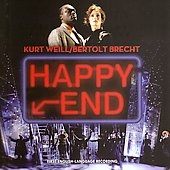
Given the long-term success of Kurt Weill and Bertolt Brecht's 1928 German musical The Threepenny Opera, it is curious that their 1929 German musical Happy End was so unsuccessful. Michael Feingold, theater critic for The Village Voice, who created the English-language adaptation, writes in his liner notes to this, the first-ever English-language recording, that "What went wrong was a spur-of-the-moment event: on opening night [September 2, 1929, in Berlin], just before the finale [Helene] Weigel [Brecht's wife], playing [the part of] The Fly, apparently departed from her last speech (most likely with Brecht's connivance), haranguing the audience, which booed and shouted back. The morning papers blasted the whole thing as another of Brecht's bad-boy stunts; riot-shy ticket buyers in that tense city stayed away in droves." That may help explain the initial response to a work that attacked the rich and the ruling class in a time and place in which Nazism was on the rise. It does not explain the subsequent obscurity of the show, especially given the popularity of the essentially similar The Threepenny Opera and the presence in the score of two Brecht/Weill standards: "The Bilbao Song" (which became a hit for Andy Williams in 1961 with an English lyric written by Johnny Mercer) and "Surabaya Johnny," a much-sung and recorded torch song popular with nightclub singers. The Feingold adaptation was staged at the Brooklyn Academy of Music starting on March 8, 1977, with a cast featuring Meryl Streep and ran 37 performances before being transferred to Broadway for an additional 75. Yet it took another 29 years before the American Conservatory Theater in San Francisco mounted the production that resulted in this album. It demonstrates that Happy End is not only a companion piece to The Threepenny Opera, but also something of a precursor to Guys and Dolls with its plot about the romance between a gangster and a member of the Salvation Army. Of course, Weill's music is nothing like Frank Loesser's for Guys and Dolls, while being very much like that of The Threepenny Opera, with a dash of hymn music thrown in, and Brecht's treatment of the story, beginning and ending with a sarcastic tribute to the Fords and Rockefellers of this world, is a much more serious depiction of the demimonde than Loesser's musical comedy treatment. The show may never achieve the recognition of The Threepenny Opera, but it deserves to be part of the Weill canon, and this recording is an excellent account of the score. ~ William Ruhlmann
読み込み中にエラーが発生しました。
画面をリロードして、再読み込みしてください。