クラシック
CDアルバム

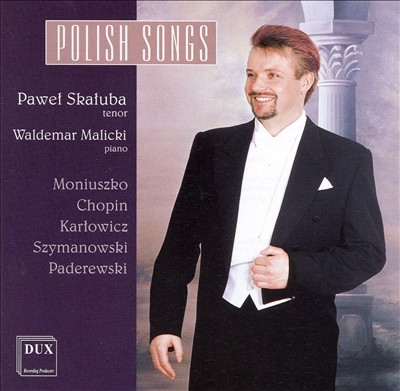
Polish Songs -Moniuszko, Chopin, M.Karlowicz, Szymanowski, etc (9/2005) / Pawel Skaluba(T), Waldemar Malicki(p)

0.0

販売価格

¥
3,069
税込
還元ポイント

在庫状況 について

フォーマット CDアルバム
発売日 2008年01月17日
国内/輸入 輸入
レーベルDUX
構成数 1
パッケージ仕様 -
規格品番 DUX0527
SKU 5902547005270

構成数 : 1枚
合計収録時間 : 00:50:11
録音 : ステレオ (---)

『ポーランド歌曲集』
【曲目】
スタニスワフ・モニュシュコ(1819-1872):
 この国を知っているか/二つの薄明/クラクフの若者/楽士/紡ぎ女
フリデリク・ショパン(1810-1849):
 悲しみの川 Op.74 No.3/酒宴 Op.74 No.4/彼女の好きな場所Op.75 No.5
 闘士 Op.74 No.10/指輪 Op.74 No.14
ミェチスワフ・カルウォヴィチ(1876-1909):
 一番星が輝くところから Op.1 No.2
 穏やかで明るい黄金の日々を私は忘れない Op.1 No.5
 私の心は痛む Op.1 No.6/もっと私に話して Op.3 No.1
 恋歌から Op.3 No.2/私のために泣かないで Op.3 No.7
 広い海を Op.3 No.9
カロル・シマノフスキ(1882-1937):
 ときどき、長らく半ば夢見心地でいるときに
 世界ははるか彼方に去り Op.2 No.1
イグナツィ・ヤン・パデレフスキ(1860-1941):
 私は苦しみ、耐えてきた Op.18 No.5/私の目から涙が流れた Op.18 No.1
 笛吹きの歌 Op.18 No.2
【演奏】
パヴェウ・スカウバ(テノール)
ヴァルデマル・マリツキ(ピアノ)
【録音】
2005年9月 ポーランド,ビドゴシュチ,ポモジェ・フィルハーモニー・コンサートホール

  1. 1.[CDアルバム]
    1. 1.
      Connais-tu ce pays (Znasz-li Ten Kraj)?, for voice & piano
    2. 2.
      Dwie Zorze (Two Twilights), for voice & piano
    3. 3.
      Krakowiaczek, song for voice & piano
    4. 4.
      Grajek ("Na zagrodzie gospody"), song for voice & piano
    5. 5.
      Przepiorczka (The Spinner), song for voice & piano (or orchestra)
    6. 6.
      Smutna rzeka (The Sad Stream), song for voice & piano, Op. 74/3, CT. 131
    7. 7.
      Hulanka (Merrymaking), song for voice & piano, Op. 74/4, CT. 132
    8. 8.
      Gdzie lubi (There Where She Loves), song for voice & piano, Op. 74/5, CT. 133
    9. 9.
      Wojak (The Warrior), song for voice & piano, Op. 74/10, CT. 138
    10. 10.
      Pierscien (The Ring), song for voice & piano, Op. 74/14, CT. 142
    11. 11.
      Skad pierwsze gwiadzy (Whence the first stars), for voice & piano, Op. 1/2
    12. 12.
      Pamietam ciche, jasne, zlote dnie (I remember quiet, clear golden days), for voice & piano, Op. 1/5
    13. 13.
      Smutna jest dusza moja (My soul is sad), for voice & piano, Op. 1/6
    14. 14.
      Mow do mnie jescze (Speak to me still), for voice & piano, Op. 3/1
    15. 15.
      Z erotykow (From the erotics), for voice & piano ("I zamiast slonc i gwiazd"), Op. 3/2
    16. 16.
      Nie placz nade mna (Weep not over me), for voice & piano, Op. 3/7
    17. 17.
      Po szerokim, po szerokim morzu (Over the wide, wide sea), for voice & piano, Op. 3/9
    18. 18.
      Songs (6) for voice & piano, Op. 2, M2~Czasem, gdy dlugo na pol sennie marze, 1895
    19. 19.
      Songs (6) for voice & piano, Op. 2, M2~Daleko zostal caly swiat, Op. 2 No. 1
    20. 20.
      Songs (6), for voice & piano, Op. 18~5. Tylem wytrwal
    21. 21.
      Songs (6), for voice & piano, Op. 18~1. Polaly sie lzy
    22. 22.
      Songs (6), for voice & piano, Op. 18~2. Piosnka dudziarza

作品の情報

商品の紹介

Dux's Polish Songs features a delightful Polish tenor, Pawel Skaluba, in a program of some of the key Romantic art song literature associated with Poland accompanied tastefully and sensitively by pianist Waldemar Malicki. This sort of thing is not too well known in the West, and the Polish language itself is the problem -- even if one enjoys singing in languages other than one's native tongue, Polish is a heck of a hurdle for a singer. Pawel Skaluba is a native, naturally, but an additional bonus is that his singing voice retains some hint of the deep vowels that one associates with the Polish language as spoken. Skaluba's singing is quite expressive, and the listener must assume that he is doing a good job of expressing the texts, as the texts of these songs are given only in Polish -- a major problem. It is critical in art song for the listener to understand what is being sung about. Had Dux taken the time to set up a webpage for this album containing translations of these songs it would have added greatly to the potential of this disc. Unless you understand Polish, then Dux's Polish Songs is going to be a matter of listening and enjoying, but not understanding. Given that challenge, the material is certainly strong and the program varied. The five songs by Stanislaw Moniuszko are excellent and go a long way toward explaining why he is considered the greatest of Poland's song composers, apart from having written more than 700 such works. The slightly Russian-sounding descending line in "Grajek" is artful and truly effecting. Certainly, this program could not go forward without a selection of Chopin's songs, arguably the best-known Polish-language songs in the literature, although they are not necessarily "famous." One puzzles over the omission of Chopin's song "Zyczenie," known in English as "The Maiden's Wish," from this program. It is the only one of Chopin's songs -- indeed, probably the only Polish art song -- that registers with some familiarity with non-Polish-speaking audiences, who know it through Liszt's piano transcription. While the notes inform us that the selection of songs of Karlowicz and Szymanowski herald the coming of a darker, more modern style, one doesn't get that impression from the music. These songs still sound sufficiently Romantic, though they are more understated than the others; Szymanowski's "Daleko zostal clay swiat," Op. 2/1, strikes particularly deep. Moreover, the Padrewski songs are excellent; perhaps no Polish composer has suffered such a downturn in posthumous reputation as he, but the qualities of these fine songs indicate that this stroke of misfortune is surely unwarranted. Dux's recording is not perfect as sometimes Skaluba falls a little behind the piano, but in the main it is more than adequate. If you speak Polish, then Dux's Polish Songs will be a slam dunk, and if you like a good tenor who is not Italian or Spanish, then it will be enjoyable likewise, if incomprehensible.
Rovi

メンバーズレビュー

レビューを書いてみませんか?

読み込み中にエラーが発生しました。

画面をリロードして、再読み込みしてください。