| フォーマット | CDアルバム |
| 発売日 | 2006年06月30日 |
| 国内/輸入 | 輸入 |
| レーベル | Repertoire |
| 構成数 | 1 |
| パッケージ仕様 | - |
| 規格品番 | RR2316 |
| SKU | 4009910231623 |
構成数 : 1枚
合計収録時間 : 00:00:00
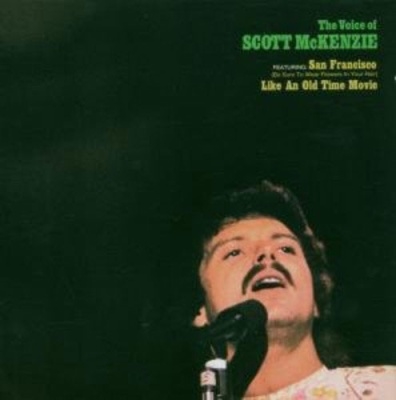
There was more to Scott McKenzie than "San Francisco," though this album came out so long after that single peaked on the charts that few people ever found out how much more. A newly minted singer/songwriter in 1967, McKenzie reveals himself throughout this album as a gifted if somewhat uneven talent -- as a singer, he worked within a relatively narrow range, which occasionally slipped dangerously close (without ever quite crossing over) to blandness, but at his most inspired, he wraps himself around a song such as Tim Hardin's "Reason to Believe" in a way that makes one forget, for an instant, that McKenzie didn't write it (and that is, one imagines, the highest compliment that one can pay to a singer/songwriter as a performer); Hardin's "Don't Make Promises" doesn't fare as well, but it's still one of the highlights, with the singer near his best in a hauntingly sincere performance. The same goes for McKenzie's renditions of such John Phillips originals as "Like an Old Time Movie" -- listening to that record more than four decades on, it's still a powerful performance that pushes lots of emotional buttons in the listener; additionally, like most of this album, it presents the identical illusion achieved by the Mamas & the Papas' records of the same era, of McKenzie as part of a cohesive band, providing the guitar himself (all of the instruments were played by pretty much the same coterie of session players who worked on the quartet's sides). Phillips' "Twelve Thirty" is, similarly, delivered with an intimacy and poignancy that the more familiar version by the Mamas & the Papas misses, and gives one the illusion of a personal confessional, so closely does McKenzie seem to embrace the lyric -- when the banjo comes in with the line "young girls are coming to the canyon," one gets the palpable sense of a psyche unraveling in joy, laced with confusion, which seems to be what Phillips originally had in mind for the lyric; and he does just as well with Phillips' "Rooms," a more personal statement about love and separation. McKenzie's rendition of Donovan's "Celeste" has a languid beauty, while his version of John Sebastian and Zal Yanovsky's "It's Not Time Now" is a more standard, rhythmic, folk-rock piece. And "No No No No No" is a catchy, light-hearted piece of misogyny about frustration, sexual and otherwise. The two introspective McKenzie originals, "What's the Difference, Chapter 1" and "What's the Difference, Chapter 2," embrace upbeat and downbeat sides of change and avoidance of change -- one gets the feeling that there was more for McKenzie to say musically than those two pieces. Based on the evidence here, he might have been a West Coast answer to James Taylor, but his career never followed a conventional arc, mostly because Ode Records released this album to appear so late after the hit. The record was later re-titled "San Francisco" in England and reissued with a reshuffled song lineup. ~ Bruce Eder
読み込み中にエラーが発生しました。
画面をリロードして、再読み込みしてください。