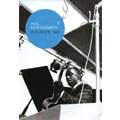
This Spanish-derived DVD contains a pair of television broadcasts capturing Wes Montgomery (guitar) during an extended European tour in the spring of 1965. Because the artist was not filmed very often -- not to mention criminally underappreciated in his home country -- any and all footage of the man during performance is nothing short of mandatory viewing. Modern consumers are treated to numerous lingering close-up shots of the guitarist's non-traditional use of his thumb in place of a plectrum. The approach would bear an amazing fullness that could accommodate octave phrasings with clean precision. Another facet is Montgomery's unfathomable musicality as he gigs with different pick-up combos. Outwardly undaunted, he goes beyond simply "making the most" of the situation. He can likewise be heard (and seen) raising the level of musical discourse among his sidemen. Most tellingly, he reveals during an interview portion of the March 25, 1966 English telecast: "I really refuse to participate in something that I don't know what part I'm supposed to be playing...If a person likes abstract things he won't know how to explain it so he won't be able to tell me, so where do you go...Me, I play the conventional way because I feel like I have to." Joining Montgomery in what is credited as the Wes Montgomery Quartet are fellow Americans Harold Mabern (piano), Arthur Harper (bass), and Jimmy Lovelace (drums). The set list is split among Montgomery originals -- primarily from his concurrent Verve Records catalog and a few favorites circa his earlier days on Riverside. In fact, that is where we find ourselves as the opening numbers are off of the highly influential Wes Montgomery Trio (1959) project. While these updates stay close to their former arrangements, the players seem comfortable with Montgomery's free-flowing flourishes and side excursions. His interpretation on Thelonious Monk's "Around Midnight" stretches out as one of the defining moments of In Europe 1965 (2006). The first of two versions of "Twisted Blues" is slightly longer as Montgomery is definitely enjoying the interaction. The London gig concludes with a smart reading of the title track from Montgomery's confab with the Wynton Kelly Trio on Full House (1962). The second show hails from an April 4, 1965 appearance on the Belgian Jazz Prisma program. Supported by the same ensemble, Montgomery launches into a spirited and adventurous spin of John Coltrane's "Impressions." The midtempo "Twisted Blues" takes viewers to the source as there are numerous opportunities to observe Montgomery's remarkable versatility. "Here's That Rainy Day" -- which is erroneously called "There's That Rainy Day" -- hails from the Bumpin' (1965) album. Underneath the soft samba and bossa nova beat is Montgomery's shimmering and liquefied fretwork. "Jingles" brings the beat around with the band ably following the leader in and out of an intricate melody with tremendous aplomb. The synergy surrounding Montgomery and drummer Lovelace is exceedingly apparent as they rhythmically up the ante throughout. The final selection "Boy Next Door" -- attributed as "The Girl Next Door" -- concludes with a gorgeous ballad refined to the point of bringing the listener to a place of humility. Not to sound overly dramatic, but it is as if his hands were guided by a greater force. ~ Lindsay Planer|
Rovi