Jazz
CDアルバム

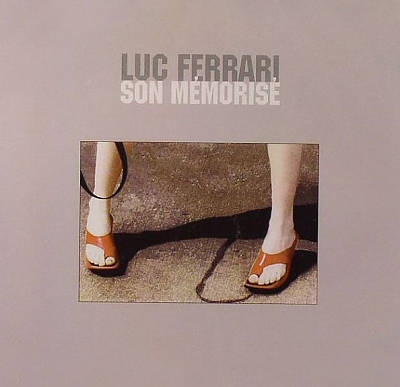
Son Memorise

0.0

販売価格

¥
2,629
税込
還元ポイント

廃盤

在庫状況 について

フォーマット CDアルバム
発売日 2010年06月28日
国内/輸入 輸入
レーベルSub Rosa
構成数 1
パッケージ仕様 -
規格品番 SR252
SKU 5411867112525

構成数 : 1枚
合計収録時間 : 01:10:42
録音 : ステレオ (Studio)

  1. 1.[CDアルバム]
    1. 1.
      Presque Rien No. 4 ("Le remontee du village"), memorized sounds~[Part 1]
    2. 2.
      Presque Rien No. 4 ("Le remontee du village"), memorized sounds~[Part 2]
    3. 3.
      Promenade symphonique dans un paysage musical ou Un jour de fete a El-Oued en 1976~[Part 1]
    4. 4.
      Promenade symphonique dans un paysage musical ou Un jour de fete a El-Oued en 1976~[Part 2]
    5. 5.
      Promenade symphonique dans un paysage musical ou Un jour de fete a El-Oued en 1976~[Part 3]
    6. 6.
      Promenade symphonique dans un paysage musical ou Un jour de fete a El-Oued en 1976~[Part 4]
    7. 7.
      Saliceburry Cocktail, memorized sound~[Part 1]
    8. 8.
      Saliceburry Cocktail, memorized sound~[Part 2]
    9. 9.
      Saliceburry Cocktail, memorized sound~[Part 3]
    10. 10.
      Saliceburry Cocktail, memorized sound~[Part 4]
    11. 11.
      Saliceburry Cocktail, memorized sound~[Part 5]

作品の情報

メイン
アーティスト: Luc Ferrari

商品の紹介

Sub Rosa's Son Memorise is both grand finale and goodbye to French composer and electronic music pioneer Luc Ferrari, who died unexpectedly in August 2005 at age 76 in the very wake of a rediscovery. For some years prior to that, Sub Rosa head and Ferrari's rediscoverer Guy-Marc Hinant had devoted a number of discs to propagating the electronic lifework of Ferrari (he wrote conventional music as well) and Son Memorise was originally designed as yet another entry in a proposed slate of releases. However, as Ferrari's expiration date arrived just slightly prior to the release date of the album, something else about this project becomes apparent -- Son Memorise truly does have an air of finality to it that nearly seems intentional. Son Memorise is the only Sub Rosa album to take its title after Ferrari's alleged technique of audio collage, which he never explicitly, fully explained. Nevertheless, it seemed to involve, at least in part, committing to memory long stretches of taped field recordings, rearranging the sounds in his head, and then reconstructing them back into collages based on his mutated mental visions of them. The La remontee du village brings to a close an important cycle of pieces entitled Presque rien (i.e., Almost Nothing) of which the first entry established Ferrari's mature approach to electronic music upon its appearance on a Deutsche Grammophon album in 1971. This piece, like the others, is built out of sounds collected in a specific environment on a single day or two, which is subject to a long process of scrutiny and recombination. The recorded event in La remontee du village is merely a walk up a steep slope in the Italian town of Vintimille, which Ferrari then took nine years to put into a finished form. Promenade Symphonique dans un Paysage Musical ou un Jour de Fete a El-Oued en 1976 is the rearranged audio remnant of a day spent in an Algerian village. This is one of the most foreign sounding among Ferrari's chosen locales and has a certain aroma and taste all its own, like an exotic cup of coffee. One nagging aspect of Ferrari's Son Memorise is how we qualify such work as "art" versus that of New York-based sound collagist Tony Schwartz, whose output is generally considered more in the realm of audio documentary than avant-garde. While Schwartz's preferences in terms of sound design seem more driven by an external story logic than Ferrari's, in Promenade Symphonique dans un Paysage Musical Ou un Jour de Fete a El-Oued en 1976, Ferrari's final assemblage is so close to following the recorded events as they originally unfolded that there is almost no distinction. Therefore, one could argue that declaring Ferrari's work "art" and Schwartz' "utilitarian" is no more than a smokescreen for Europeans trying to take away credit from an American artist who is so entitled and that either one should be elevated or the other downgraded. Saliceburry Cocktail, though, is clearly "Art" with a capital "A." Ferrari collects a number of unused sounds from various projects and proceeds to obliterate them with other things he has collected for a work, or works, that he does not intend to complete. Alone among the pieces here, Saliceburry Cocktail hearkens back to the accidental aesthetic that drove Ferrari's first compositions on tape in the late '50s, but it is also about cleaning one's desk, pressing into service the leftovers of one's life and then erasing them. In the notes, Hinant does not indicate if Ferrari continued to work past Saliceburry Cocktail. However, as in the case of Olivier Messiaen's Illuminations of the Beyond, Saliceburry Cocktail certainly feels like what Ferrari intended as his valedictory statement. Therefore, even if he did succeed in creating something else past Saliceburry Cocktail, then that would be a bonus for us, but for Ferrari his last words were already seemingly spoken in this work.
Rovi

Son Memorise (Memorized Sound) is the second installment in a three-volume series put together by the Sub Rosa label and Luc Ferrari before the latter died. This album focuses on the composer's musique concrete and presents three previously unreleased works: the final "Presque Rien," an old piece, and a very recent one. "Presque Rien #4" takes us on a walk through a village, although this is not your average soundwalk. Reality is being shaped as Ferrari sticks his microphone left and right (he once said that the act of recording was a form of composition in itself), and being reshaped in the studio afterwards, with snippets of dialogue being used as leitmotivs and abstract sonic material highlighting the "real" events. The piece shows once again how agile Ferrari could be with field recordings as he reinvents them from top to bottom. The title of the 1978 piece "Promenade Symphonique dans un Paysage Musical ou un Jour de Fete a El-Oued, 1976" means "symphonic walk through a soundscape on a festive day in El Oued, 1976." The field recordings serving as the basis for this half-hour long work were made in Algeria. Ferrari takes his microphone through the desert, to a city where people start singing at the sight of it. The composer walks straight into a wedding and there, the celebrations escalate into music, dance, and gunfire. All the action is carefully structured, to a point where, again, notions of reality and fiction intermingle. However, the middle sections are somewhat long, and the sense of displacement does not last. Much better is "Saliceburry Cocktail," an abstract electro-acoustic piece completed in 2002. No field recordings, no narrative, only a complex game of hide and seek between natural sounds and their multiple transformations. Highly dynamic and intense, this 30-minute work is an essential for musique concrete connoisseurs: as dramatic and absorbing as Francis Dhomont's best works, more immediate and emotional than Pierre Henry's, it is alone worth the price of this album. ~ Francois Couture
Rovi

メンバーズレビュー

レビューを書いてみませんか?

読み込み中にエラーが発生しました。

画面をリロードして、再読み込みしてください。