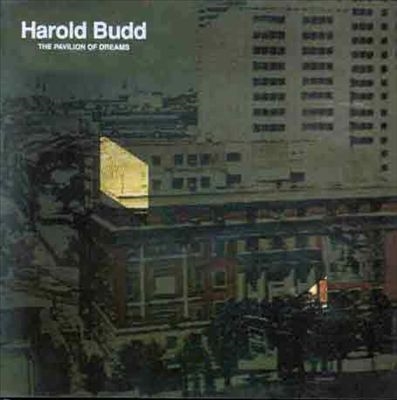
In 1978, THE PAVILION OF DREAMS marked Harold Budd's arrival on the international music scene. Decades removed, this release is still unique given its compositional grace and clever mixture of musical styles. On this album, Budd's music blends minimalism with contemporary classical and jazz balladry. The result is the emerging sound of ambient music, a style that was still new at the time.
THE PAVILION OF DREAMS includes four pieces. Unlike most modern ambient music, Budd's compositions feature chamber ensembles. Moreover, his work never falls back on electronics or washy keyboard patches. The longest composition, "Bismillahi 'Rrahman 'Rrahim", draws on the music of John Coltrane. Here, saxophonist Marion Brown plays with great restraint as Budd's plaintive melody floats over the rolling mallet percussion and cascading electric piano arpeggios. Other pieces feature the gentle harp playing of Maggie Thomas and an array of singers. "Two Songs" is the closest Budd comes to composing lieder, while the exploratory "Juno" requires the percussion ensemble to sing as they play. A hallmark in the ambient genre, this music will always sound fresh and compelling.|
Rovi
Mixing ethereal melodies communicated by voice or saxophone with glissando accompaniment, Harold Budd creates a series of siren songs on The Pavilion of Dreams that shimmer like light reflected on the water's surface. Billed as "an extended cycle of works begun in 1972," Budd's debut apparently took a while to see the light of day itself, having been recorded in 1976, released on the aptly titled Obscure label in 1978, and re-released in 1981 on Editions EG. The minimalist composer had gained some attention in avant-garde circles with the piece "Madrigals of the Rose Angel"; featured here, it reveals the unhurried and unfolding nature of Budd's melodies as well as his penchant for clusters of bell-like notes. "Two Songs" was written in the years that followed, adapting works from Pharoah Sanders and John Coltrane with arrangements that feature only mezzo-soprano Lynda Richardson and harpist Maggie Thomas; unless you thought the theme song to the Star Trek TV series was high art, you can skip this. The opening "Bismillahi 'Rhahmani 'Rrahim" is the musical equivalent of a bubble bath; led by the soulful saxophone of Marion Brown, it's initially lovely, yet the circumspect arrangement saps the piece of its spellbinding effect before long. The last piece composed here, "Juno," is also the most passionate, foreshadowing the warmth and presence that would appear on subsequent works like "The Plateaux of Mirror." As with most minimalist works, The Pavilion of Dreams requires patience and open-mindedness on the part of the listener, only more so. Harold Budd achieved an evocative and succinct style on subsequent albums, and these songs are simply the rudimentary steps that led there. ~ Dave Connolly
Rovi