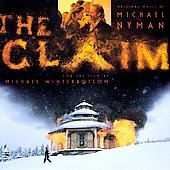
| フォーマット | CDアルバム |
| 発売日 | 2001年01月29日 |
| 国内/輸入 | 輸入 |
| レーベル | Virgin |
| 構成数 | 1 |
| パッケージ仕様 | - |
| 規格品番 | 5454722 |
| SKU | 724354547225 |
構成数 : 1枚
合計収録時間 : 00:50:05
Original score composed and conducted by Michael Nyman.
Recorded at Whitfield Street Studios, London, England in September 2000.
Composer: Michael Nyman.
Personnel: Julian Leaper, Mark Berrow, Ann Morfee, Rachel Allen , Ed Coxon, Paul Willey, Dermot Crehan, Peter G. Hanson, Thomas Bowes , Ian Humphries, Patrick Kiernan, Cathy Thompson (violin); Paul Martin, Kate Musker, Bruce White (viola); William Schofield, Nick Cooper , Sophie Harris, Tony Hinnigan (cello); Jonathan Snowden (flute, piccolo); Steve Sidwell (piccolo, trumpet, flugelhorn); Christopher Hooker (oboe); Simon Haram (soprano saxophone, alto saxophone); Paul Gardham (French horn); Nigel Barr (trombone, tuba); Mike Brittain, Paul Sherman (double bass); Martin Elliott (bass guitar); Greg Knowles (percussion); Robert Sigmund Worby (programming).
Recording information: Whitfield Street, London, England (09/2000).
Illustrator: Dave McKean.
Unknown Contributor Role: Michael Nyman Orchestra.
Michael Nyman's sweeping score to director Michael Winterbottom's film The Claim might contain the most mournful compositions of the composer's career. Nyman's most successful scores in the past have been those where he explored baroque minimalism, as seen in his film scores to many Peter Greenaway films, and those where he tackled strong emotions, as in his score to Jane Campion's The Piano. With The Claim, Nyman composes in broad strokes; the minimalism of past compositions is still on display, but it's buried under a wall of evocative strings and weary brass through most of tracks. Some critics have called The Claim Nyman's answer to Ennio Morricone's score for Sergio Leone's Once Upon a Time in the West. It's not really a fair assessment of either score. It's true that there are echoes of "Jill's Theme" from Once Upon a Time in the West, perhaps most clearly in "The Burning," but the two composers display entirely different intentions and emotions. Morricone's score had overtures that sounded like rock music; there are moments in Morricone's score where a paranoid harmonica and raging distortion suggest infinite menace. As accomplished as Morricone's score is, there are definite camp underpinnings; that's the nature of a spaghetti western score. Nyman operates in a far more restrained set of boundaries. There's never a moment when the music sounds anything less than classical and refined. Each of Nyman's individual compositions strive for a myriad of feelings, whereas Morricone used his compositions to display the mood of the on-screen action, be it pensive, tense, or horrifying. The Claim almost gets bogged down in strings, as Nyman piles them on quite heavily. It's safe to say that the score probably works better when paired with Winterbottom's images than it does on its own. Since the movie deals with serious themes and generally avoids frivolity, Nyman's score seems almost deadly serious. The music is beautiful, but more variation would make it more palatable as a separate entity from the movie. It's much easier to appreciate most of Nyman's film scores after viewing the source movies, and The Claim might be the best example of a score that seems a bit overbearing when one can't place an image or a character to an emotion within the music. There are minor echoes of Morricone, and The Claim is a work of great artistry and much beauty, but it works better in Winterbottom's film than it does as an album. ~ Tim DiGravina
録音 : ステレオ (Studio)
読み込み中にエラーが発生しました。
画面をリロードして、再読み込みしてください。