Jazz
CDアルバム

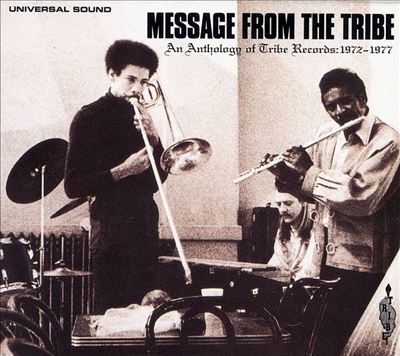
Message From The Tribe (An Anthology Of Tribe Records)

0.0

販売価格

¥
3,490
税込
還元ポイント

廃盤

在庫状況 について

フォーマット CDアルバム
発売日 1999年07月15日
国内/輸入 輸入
レーベルUniversal Sound
構成数 1
パッケージ仕様 -
規格品番 USCD5
SKU 5026328200521

構成数 : 1枚
合計収録時間 : 00:59:56
Personnel: Phil Ranelin (vocals, trombone); Jerry Glassel (guitar); Ralph Armstrong (electric guitar); Doug Hammond (violin, melodica, synthesizer, ARP synthesizer, drums); Larry Nozero (flute, reeds, cuica); Wendell Harrison (flute, tenor saxophone); Marcus Belgrave, Charles Moore (trumpet, flugelhorn); Harold McKinney, Kenn Cox , Buddy Budson, Charles Eubanks (piano); Daryl Dybka (mini-Moog synthesizer); William Austin (acoustic bass, electric bass); Ed Pickens (electric bass); Roy Brooks (drums, percussion); Billy Turner, George Davidson (drums); Lorenzo Brown (bongos); Dave Koether, Barbara Huby, Bud Spangler (percussion). Recording information: 1972-1977. Arranger: Wendell Harrison. Detroit's Tribe Records was a political, social, and aesthetic collective of local musicians whose collective identity was a staggering array of aesthetic ones -- especially in music. The group headed by Wendell Harrison and Phil Ranelin also held in its ranks Marcus Belgrave and the late Harold McKinney, with countless others, such as bassist Ron Brooks, trumpeter Charles Moore, drummer Doug Hammond, and others joining in for sessions and concerts. Tribe was the only label in history to have had musicians who played with everyone from Charles Parker and Mingus and Sun Ra to Marvin Gaye and the Supremes. Besides the record company, Tribe held a publishing house for a magazine and a production company under its roof. This Universal Sound sampler collects music from all nine Tribe albums, and an awesome glossy, miniature facsimile of Tribe magazine in a deluxe slipcase edition. Universal Sound's trademark is one of quality, with well-mastered compilations of forgotten yet necessary material from the African-American and Latin music communities that existed during the 1960s, '70s, and '80s throughout the United States that have passed into history largely unappreciated despite their influence and contribution to the culture at large. The most striking impression of Tribe is its musical diversity: here were a group of jazz musicians whose own approaches to music were very different from one another, who folded everything into the soup: soul, bebop, hard- and post-bop, modal, funk, groove jazz, vocals, avant-garde improvisations, and so on. From David Durham's half-minute, string freakout "Space #2," to the early funky groove-oriented jazz-funk of Ranelin's "Vibes From the Tribe" and "Sounds From the Village" to the strange, baroque vanguard of Hammond's vocal "Moves" to the deep, slippery, greasy fatness of the Tribe's "Benificent," which combined Coltrane-like modal improvisation with Latin percussion and Detroit funk in a sticky soup of pure sonic pleasure. Belgrave's landmark nine-minute epic "Space Odyssey" combines the use of electronic experimentation with amplified piano and big-band arrangements -- a la his stint with Mingus during the "Pre-Bird" era -- and is still a piece ahead of its time in terms of both jazz arrangement and composition despite its aural limitations due to the shortcomings of the gear used at the time of the recording. The set officially ends with Wendell Harrison's "Tons and Tons of B.S.," featuring a small big band with a percussion section playing counterpoint to the four-horn front line. The groove is strictly Latin with Harrison lending a melodic sensibility from both the hard bop and early modal schools of Miles Davis, with a Coltrane and an R&B vibe! All the sounds are mixed, all given due weight in the tune, making for a piece as provocative and harmonically advanced as anything that came out of the '70s -- in fact, more than most. The reason was the vision: Tribe was all-inclusive, wanting to leave no music outside of its walls. Hence the kitchen-sink approach -- that had been tried by everybody from Archie Shepp (Attica Blues) to Ornette Coleman (Skies of America) to Miles with mixed results. Tribe may have only existed for five years, but during that time it changed the musical univer to be continued...

  1. 1.[CDアルバム]
    1. 1.
      Space 2 / David Durrah

      アーティスト: Tribe (Rock)

    2. 2.
      Vibes from the Tribe / Phil Ranelin / Tribe

      アーティスト: Tribe (Rock)

    3. 3.
      Sounds from the Village / Phil Ranelin / Tribe

      アーティスト: Tribe (Rock)

    4. 4.
      Moves / Doug Hammond

      アーティスト: Tribe (Rock)

    5. 5.
      Beneficent / Tribe

      アーティスト: Tribe (Rock)

    6. 6.
      What We Need / Tribe

      アーティスト: Tribe (Rock)

    7. 7.
      Space Oddysey / Marcus Belgrave

      アーティスト: Tribe (Rock)

    8. 8.
      For the Children / Phil Ranelin / Tribe

      アーティスト: Tribe (Rock)

    9. 9.
      La Margarita / The Mixed Bag

      アーティスト: Tribe (Rock)

    10. 10.
      Wake up Brothers / Doug Hammond

      アーティスト: Tribe (Rock)

    11. 11.
      Tons and Tons of B.S. / Wendell Harrison

      アーティスト: Tribe (Rock)

    12. 12.
      [Untitled Track]

      アーティスト: Tribe (Rock)

作品の情報

メイン
アーティスト: Tribe (Jazz)

商品の紹介

Uncut (p.91) - 4 stars out of 5 -- "A Detroit label that grew out of a city Black Awareness magazine, Tribe Records was plugged into a supply of local jazz, funk -- and of course, empowerment." Pitchfork (Website) - "The music is most striking for its eclectic, without-borders approach..."
Rovi

Detroit's Tribe Records was a political, social, and aesthetic collective of local musicians whose collective identity was a staggering array of aesthetic ones -- especially in music. The group headed by Wendell Harrison and Phil Ranelin also held in its ranks Marcus Belgrave and the late Harold McKinney, with countless others, such as bassist Ron Brooks, trumpeter Charles Moore, drummer Doug Hammond, and others joining in for sessions and concerts. Tribe was the only label in history to have had musicians who played with everyone from Charles Parker and Mingus and Sun Ra to Marvin Gaye and the Supremes. Besides the record company, Tribe held a publishing house for a magazine and a production company under its roof. This Universal Sound sampler collects music from all nine Tribe albums, and an awesome glossy, miniature facsimile of Tribe magazine in a deluxe slipcase edition. Universal Sound's trademark is one of quality, with well-mastered compilations of forgotten yet necessary material from the African-American and Latin music communities that existed during the 1960s, '70s, and '80s throughout the United States that have passed into history largely unappreciated despite their influence and contribution to the culture at large. The most striking impression of Tribe is its musical diversity: here were a group of jazz musicians whose own approaches to music were very different from one another, who folded everything into the soup: soul, bebop, hard- and post-bop, modal, funk, groove jazz, vocals, avant-garde improvisations, and so on. From David Durham's half-minute, string freakout "Space #2," to the early funky groove-oriented jazz-funk of Ranelin's "Vibes From the Tribe" and "Sounds From the Village" to the strange, baroque vanguard of Hammond's vocal "Moves" to the deep, slippery, greasy fatness of the Tribe's "Benificent," which combined Coltrane-like modal improvisation with Latin percussion and Detroit funk in a sticky soup of pure sonic pleasure. Belgrave's landmark nine-minute epic "Space Odyssey" combines the use of electronic experimentation with amplified piano and big-band arrangements -- a la his stint with Mingus during the "Pre-Bird" era -- and is still a piece ahead of its time in terms of both jazz arrangement and composition despite its aural limitations due to the shortcomings of the gear used at the time of the recording. The set officially ends with Wendell Harrison's "Tons and Tons of B.S.," featuring a small big band with a percussion section playing counterpoint to the four-horn front line. The groove is strictly Latin with Harrison lending a melodic sensibility from both the hard bop and early modal schools of Miles Davis, with a Coltrane and an R&B vibe! All the sounds are mixed, all given due weight in the tune, making for a piece as provocative and harmonically advanced as anything that came out of the '70s -- in fact, more than most. The reason was the vision: Tribe was all-inclusive, wanting to leave no music outside of its walls. Hence the kitchen-sink approach -- that had been tried by everybody from Archie Shepp (Attica Blues) to Ornette Coleman (Skies of America) to Miles with mixed results. Tribe may have only existed for five years, but during that time it changed the musical universe -- even if nobody knew it. ~ Thom Jurek
Rovi

メンバーズレビュー

レビューを書いてみませんか?

読み込み中にエラーが発生しました。

画面をリロードして、再読み込みしてください。