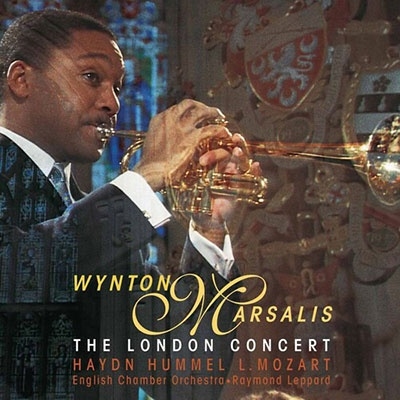
This should not be thought of as a crossover disc by a jazz artist trying his hand at classical music. It is a classical disc by a well-educated and highly talented musician. Although Marsalis is known as a jazz musician and educator, the original release of the first four concertos here was recorded when he was just 20 and relatively new to the jazz world as well. This "expanded edition" of the original CBS release of the Haydn, Mozart, Fasch, and Hummel works adds concertos from two other releases. Throughout these works, he, Leppard, and the English Chamber Orchestra are consistently clean and precise. They also are careful not to add overly affected expression to the music, although these are not period instruments nor are they using period performance practice, as Marsalis points out in the accompanying notes. Marsalis has a beautiful, smooth tone that is clear, but not sharply brilliant, so it blends wonderfully with the strings. The Hummel is especially attractive, where Marsalis plays as if he were singing an aria in the Andante, and the Rondo at times takes on the humor of a Gilbert and Sullivan patter song. The first of the additional concertos, a brief one by Michael Haydn, really tests Marsalis' abilities. He maintains his tone and phrasing even as he tackles the virtuoso ornamentation and accurately reaches the extreme high notes. Marsalis recorded both solo parts of the Vivaldi concerto, so again, there is consistency in its execution. The sound quality is excellent, becoming brighter as it moves into the bonus tracks. It's a good way to get the greatest hits of the trumpet concerto repertoire, performed with great skill by Marsalis.
Rovi
Like any other classical star, Wynton Marsalis felt the urge to re-record the basic repertoire for his instrument after awhile -- and so, he goes at the Haydn, Leopold Mozart, Fasch, and Hummel trumpet concertos again, only a decade after his first go-round with these works. While it might seem presumptuous to remake these performances so soon, there are signs of growth here that repay close listening. Marsalis' Haydn, for example, shows considerably more depth of thought and variety in phrasing than on the earlier hit record; the finale, in particular, gains in expressiveness. In general, the tempos are a little slower than on the earlier records, the technical finish of Marsalis' playing is just as polished. Raymond Leppard again is the conductor, and he too displays a freer, more expressive hand as leads the English Chamber Orchestra. Moreover, the sound has more depth than the '80s recordings. What is missing is the sense of occasion of the earlier records, where a brash 21-year-old trumpet virtuoso proves to the world -- and specifically to young black musicians (as he claimed in interviews) -- that it's possible to play both the classical and jazz repertoire well. By 1994, this was old news. Also, the title The London Concert seems to be rather misleading, for these recordings in St. Giles Church do not sound like live performances, and the fact that they were made in London is nothing special; Marsalis' earlier recordings were done in that city, too. If you don't have the artist's earlier performances, these recordings are preferable, but if you do have them, there's no urgent need to invest in this unless you're collecting the series. The differences aren't huge. ~ Richard S. Ginell
Rovi