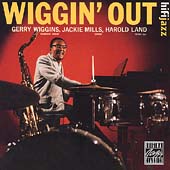
| フォーマット | CDアルバム |
| 発売日 | 1999年10月19日 |
| 国内/輸入 | 輸入 |
| レーベル | Original Jazz Classics |
| 構成数 | 1 |
| パッケージ仕様 | - |
| 規格品番 | 1034 |
| SKU | 025218703420 |
構成数 : 1枚
合計収録時間 : 00:38:55
Personnel: Gerry Wiggins (Hammond organ); Harold Land (tenor saxophone); Jackie Mills (drums).
Recorded in Hollywood, California in 1960.
Digitally remastered by Kirk Felton (1999, Fantasy Studios, Berkeley, California).
Personnel: Gerald Wiggins (piano); Harold Land (tenor saxophone); Jackie Mills (drums).
Audio Remasterer: Kirk Felton.
Recording information: Hollywood, CA (1960).
The only recording pianist Wiggins did on the Hammond B-3 organ, this was cut at a time when he was helping Marilyn Monre with her singing for the film Let's Fall In Love. Tenor saxophonist Harold Land and drummer Jackie Mills give firm, swinging support on this six-song program with no ballads. Wiggins has a different sound; cool, and snake-like sneaky, his organ coils and creeps up behind the other instruments. Only at times do his chords shout in pronounced or overt tones. His patience allows the groove to speak many more volumes than it would with mere attenuation. Wiggins wrote two of these: the title track has a natural easy swing with Land's tasty tenor leading and organ following in "It's Sand, Man"-Count Basie-type footprints; and "Yes, Dove," aka "Strip City," is the slinky, sexy blues you'd expect of an association with Monroe, replete with swelling organ moans and groans. Of the standards, "Teach Me Tonight" is tidy and delicate, featuring Land and Wiggins stepping out on the bridge; and "A Night in Tunisia" has that beautiful balance that an organ and tenor (or guitar) can ultimately achieve in this context, with Wiggins playing the famous counter melody. The slowest swinger "Don't Get Around Much Anymore" is fronted by the piquant Land with Wiggins playing the sub-melody. An interesting, extremely uptempo "Without a Song" is spiced with Afro-Cuban mambo; it's also the hardest swing of the date. Wiggins gets down in his most aggressive solo on the recording. Known primarily as one of the great accompanists of the '60s, he proved he had a handle on the B-3 and used it in tasteful ways -- far from cocktail lounge melancholia but not as high-yield as Jimmy Smith, Don Patterson, or Larry Young. It's a good aside nonetheless, and a format he perhaps could investigate again later in his storied career. This is recommended to the organophile. ~ Michael G. Nastos
録音 : ステレオ (Studio)

※ショッピングカートおよび注文内容の確認画面にてフラゲのお届けになるかご確認ください。
※各種前払い決済をご利用の場合、フラゲは保証しておりません。
※フラゲは配送日時指定なしでご注文いただいた場合に限ります。
読み込み中にエラーが発生しました。
画面をリロードして、再読み込みしてください。