クラシック
CDアルバム

販売価格

¥
3,069
税込
還元ポイント

在庫状況 について

フォーマット CDアルバム
発売日 2004年07月15日
国内/輸入 輸入
レーベルPneuma
構成数 1
パッケージ仕様 -
規格品番 PN660
SKU 8428353066016

構成数 : 1枚
合計収録時間 : 00:54:26

  1. 1.[CDアルバム]
    1. 1.
      Dit le Bourgignon
    2. 2.
      Ein welscher tantz Wascha Mesa, for lute (The Lautenbuch, Book I)
    3. 3.
      Daca, bailemos, Carillo, villancico for 3 voices
    4. 4.
      Alla se me ponga el sol, for vocal ensemble
    5. 5.
      Paseavase el rey moro
    6. 6.
      Calata No. 6 "a la spagnola", for lute
    7. 7.
      Alta a 3 (Danza sobre La Spagna)
    8. 8.
      Justa fue mi perdicion
    9. 9.
      Mit Ganczen Willen Wunsch Ich Dir, chorale prelude for organ
    10. 10.
      ?Qu'es de ti, desconsolado?, cancionero (from Cancionero de Palacio)
    11. 11.
      Calata No. 3 "a la spagnola", for lute

作品の情報

商品の紹介

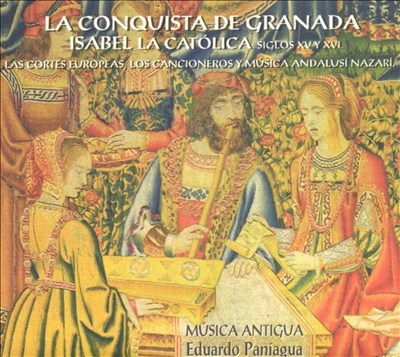
Pneuma's La Conquista de Granada: Isabel la Catolica featuring Eduardo Paniagua and Musica Antigua addresses in detail a number of obscure factors dealing with Spanish history. "Isabel la Catolica" was, of course, the Isabella connected in most American minds with Ferdinand and Isabella, who in 1493 paid for Columbus to sail the ocean blue. Relatively few would be aware that her marriage to Ferdinand would have long-reaching implications for the political makeup of the interior of Spain, as it was during her reign that the Moorish kingdoms within were conquered. 1492 was also the year that Granada was overcome and the last Arabs expelled from the Iberian Peninsula. In order to illustrate the time and circumstances of this period, Paniagua has assembled a free-ranging program culled from a number of sources; instrumental dance music from German, Italian, and Andalusian sources and a couple of lengthy Arabic ballads from text-only sources that have been matched to melodies culled from Spanish lute music written by Luys de Narvaez. These are played on a mixture of period instruments including the viola da braccio, gamba, vihuela, oud, recorders, dulcimer, and miscellaneous percussion. The material is so obscure that one might not feel compelled to argue against the authenticity of the program; however, once you get a sense of what Paniagua is up to it is hard not to conclude that some of the historical inferences and musical relationships employed are conjectural. The recording is very well made, but quite loud; the percussion booms and the instruments are very up close in a dark and rather heavy ambience. The Arabic ballads are very long, with many verses, and the singing by Cesar Carazo is okay, but rather bland in a way and wears out one's attention span before long. The most striking thing about this project is that Paniagua informs us that Milanese composer Joan Ambrosio Dalza, whose lute music is prominently featured in the early editions of Petrucci's Odhecathon, was not Italian but Andalusian. Given Dalza's name and stylistic fingerprints, this is a useful suggestion that has some credibility -- certainly nothing for sure is known about Dalza. Also included in this program is Hans Neusidler's Welscher Tantz -- Wacha Mesa, and although it is a very nice recording, one wonders what the Welsh dance written by the German composer is doing here. While the music is generally good, the scholarly component of Pneuma's La Conquista de Granada: Isabel la Catolica seems to reach a bit too far, and this is not helped by the indifferently translated and confusing English liner notes.
Rovi

メンバーズレビュー

レビューを書いてみませんか?

読み込み中にエラーが発生しました。

画面をリロードして、再読み込みしてください。