| フォーマット | CDアルバム |
| 発売日 | 2004年04月08日 |
| 国内/輸入 | 輸入 |
| レーベル | Classics Jazz (France) |
| 構成数 | 1 |
| パッケージ仕様 | - |
| 規格品番 | CEL50902 |
| SKU | 3307510509021 |
構成数 : 1枚
合計収録時間 : 00:57:38
Personnel: Bill Jennings (guitar); Victor Thomas, Samuel Parker (tenor saxophone); Frank Campbell, Alexander Nelson, Jim Wynn (baritone saxophone); Joe Bridgewater (trumpet); Jimmy Williams , Jimmy Harris (piano); James Harris , Wilbert Smith, Robert Sims, Ray Miller, Albert "Gentleman June" Gardner (drums).
Liner Note Author: Dave Penny.
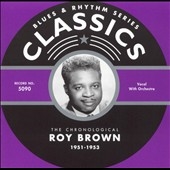
Soon after Roy Brown scored measurable success with "Bar Room Blues" (1950) and "Big Town" (1951), his record sales dipped rather suddenly, whereupon the singer appears to have suffered an attack of professionally induced paranoia. What happened next was quite possibly a byproduct of Brown's unhappy dealings with Wynonie Harris, the man who initially rejected Brown's most famous tune "Good Rockin' Tonight" (1947) and then hijacked it, scoring a number one hit after the composer's rendition began showing up on the charts. Given the sheer ubiquity of Harris' ultra-popular version of this archetypal jump tune (many people probably still believe that he wrote it) Brown's subsequent behavior seems like a tragic exercise in frustration. Apparently suspicious of everyone in the immediate vicinity who represented the music business, Brown rashly decided to have the musician's union investigate them all, including his manager Jack Pearl and Syd Nathan, the owner of DeLuxe records. Pearl's license got yanked and Brown's royalty account was scrutinized. While this must have stirred things up nicely the result was anything but beneficial for Roy Brown; he soon found himself shut out with no gigs whatsoever and was squeezed out of Cincinnati at a time when the public was grooving on his act. This volume in the Classics Roy Brown chronology opens with "Brown Angel," his very last DeLuxe release, and three other titles recorded in Cincinnati on September 27, 1951. Farmed out to the King label, he wasn't able to record again until December 18 and 19, 1952, back home in New Orleans. Legend has it these exciting tracks were essentially "buried" in the extensive King catalog. Even if these recordings didn't sell very well, they sound great today, particularly the apoplectic "Hurry Hurry Baby" which opens with a hair-raising scream, and the manic-depressive "Laughing but Crying," an unsettling study in fragmented emotions garnished with a Larry Darnell-styled recitative. The discography tells a tale of protracted travels: "Mr. Hound Dog's in Town," Brown's answer song to Big Mama Thornton's biggest hit, was recorded in Cincinnati; his next session took place in Los Angeles, and the compilation closes with three titles waxed in Miami at the end of 1953. Regardless of what the music business bosses or the Billboard chart said about Roy Brown during this troublesome time period, the music he left behind is packed to overflowing with heartfelt human emotions that everybody can relate to. ~ arwulf arwulf
録音 : ステレオ (Studio)
読み込み中にエラーが発生しました。
画面をリロードして、再読み込みしてください。