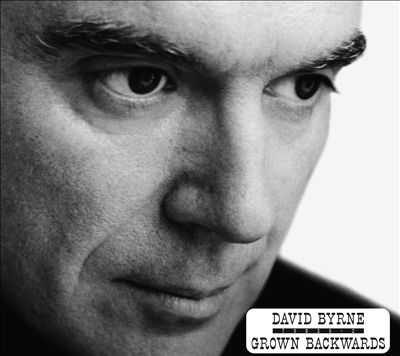
Entertainment Weekly (3/26/04, p.74) - "Byrne's affectless tenor is a perfect match for the delicate bob-and-weave grooves on this CD..."
Q (4/04, p.107) - 3 stars out of 5 - "[A]rresting in its breadth of content and creativity."
Uncut (4/04, p.96) - 3 stars out of 5 - "[M]ore wide-ranging in a subtler, more subversive manner, taking in Gallic accordion...countrified pedal-steel guitar...and lashings of elegant string arrangements."
CMJ (4/04, p.36) - "Here again, he just yanks in influences from all over the place and pastes them together to create tiny, heartfelt gems, as endearing as they are marvelously catchy."
Mojo (Publisher) (4/04, p.99) - 4 stars out of 5 - "[E]ssayed with the beaming confidence of a 51-year-old artist whose intellect and joie de vivre have achieved a long-overdue synergy."
Rovi
David Byrne, like fellow New York transplant David Bowie, has reached a well-deserved apex in his career. After eight post-Talking Heads solo outings, the eccentric composer, songwriter, artist, and world music entrepreneur has transcended the inconsistencies of his previous efforts and created a genuinely moving and wickedly fun record. Like Bowie's Heathen and Reality, Grown Backwards is a mature work by an icon who has come to terms with his past, present, and future, and there's a joy in the simple act of creativity here that gives even the heaviest of subject matter an effervescent charm. Opening with "Glass, Concrete, and Stone," Byrne finds the perfect middle ground between his orchestral epic The Forest and the South American-inspired Rei Momo -- in fact, it's the latter that informs many of Backwards' arrangements. Texas-based chamber group the Tosca Strings feature on nearly every track, giving the more experimental cuts a much needed fluidity, especially on the arias Un Di Felice, Eterea, from Verdi's La Traviata, and Au Fond du Temple Saint, a duet from Bizet's The Pearl Fishers. It's no great surprise that the shape-shifting Byrne has chosen opera as his latest foray, but what is surprising is that it works. The Bizet duet in particular, featuring Rufus Wainwright, is lent an emotional resonance by the juxtaposition of the pair's wildly different vocal styles -- when they finally meet in harmony it's like two Central Park bums behind Tavern on the Green, clinking their 40-ounce bottles and weeping into a dumpster beneath a sea of summer stars. The wonderfully acerbic "Empire," with its refrain of "The weak among us perish," is Byrne at his political best, emphasizing the "play" in wordplay like a sinister Paul Simon. While by no means a protest record, it bristles with liberal wit and social commentary, especially on the Broadway-style "The Other Side of This Life," a hilarious and scathing jab at the entertainment empires and their minions. "Tiny Apocalypse" finds Byrne at his surreal best, nearly rapping the lyrics "A three-tone carpet and a Jackie Chan spear/lookin' at a hairdo and a bellyful of beer/well, I ain't no poet, ain't got no rhyme/but I got me a car and I know how to drive" over an easy Tropicalia groove. As with many of the prolific artist's releases, the record could be trimmed by five or six songs, but fans have grown accustomed to these aberrations -- which are still of higher quality that many in the industry -- and are willing to either let them go or let them grow. While by no means perfect, Grown Backwards is the colorful, multiethnic sound of a New York City enthralled with itself, and like a select few of the Big Apple's denizens, Byrne is a perfect conduit for its love.
Rovi
David Byrne, like fellow New York transplant David Bowie, has reached a well-deserved apex in his career. After eight post-Talking Heads solo outings, the eccentric composer, songwriter, artist, and world music entrepreneur has transcended the inconsistencies of his previous efforts and created a genuinely moving and wickedly fun record. Like Bowie's Heathen and Reality, Grown Backwards is a mature work by an icon who has come to terms with his past, present, and future, and there's a joy in the simple act of creativity here that gives even the heaviest of subject matter an effervescent charm. Opening with "Glass, Concrete, and Stone," Byrne finds the perfect middle ground between his orchestral epic The Forest and the South American-inspired Rei Momo -- in fact, it's the latter that informs many of Backwards' arrangements. Texas-based chamber group the Tosca Strings feature on nearly every track, giving the more experimental cuts a much needed fluidity, especially on the arias Un Di Felice, Eterea, from Verdi's La Traviata, and Au Fond du Temple Saint, a duet from Bizet's The Pearl Fishers. It's no great surprise that the shape-shifting Byrne has chosen opera as his latest foray, but what is surprising is that it works. The Bizet duet in particular, featuring Rufus Wainwright, is lent an emotional resonance by the juxtaposition of the pair's wildly different vocal styles -- when they finally meet in harmony it's like two Central Park bums behind Tavern on the Green, clinking their 40-ounce bottles and weeping into a dumpster beneath a sea of summer stars. The wonderfully acerbic "Empire," with its refrain of "The weak among us perish," is Byrne at his political best, emphasizing the "play" in wordplay like a sinister Paul Simon. While by no means a protest record, it bristles with liberal wit and social commentary, especially on the Broadway-style "The Other Side of This Life," a hilarious and scathing jab at the entertainment empires and their minions. "Tiny Apocalypse" finds Byrne at his surreal best, nearly rapping the lyrics "A three-tone carpet and a Jackie Chan spear/lookin' at a hairdo and a bellyful of beer/well, I ain't no poet, ain't got no rhyme/but I got me a car and I know how to drive" over an easy Tropicalia groove. As with many of the prolific artist's releases, the record could be trimmed by five or six songs, but fans have grown accustomed to these aberrations -- which are still of higher quality that many in the industry -- and are willing to either let them go or let them grow. While by no means perfect, Grown Backwards is the colorful, multiethnic sound of a New York City enthralled with itself, and like a select few of the Big Apple's denizens, Byrne is a perfect conduit for its love. ~ James Christopher Monger
Rovi
エクスプレス2との共演などに続くソロ・アルバム。オーケストラ、オペラ、アフリカ……、さまざまなスタイルにエクスペリメンタルな効果で一貫性を与えた、まさにデヴィッド・バーン印のポップ・アルバム。野心的であるが故に、良い意味で〈未完成〉なのもいつもながら心憎い。イラク戦争に対してもグサリとやりつつ、どんなに重いテーマにもどこか活き活きとした魅力を与えるセンスは健在。現在形にして集大成。
bounce (C)木村 優宏
タワーレコード(2004年05月号掲載 (P83))