Jazz
CDアルバム

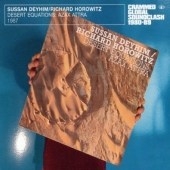
Desert Equations: Azax Attra

0.0

販売価格

¥
2,990
税込
還元ポイント

在庫状況 について

フォーマット CDアルバム
発売日 2003年06月30日
国内/輸入 輸入
レーベルCrammed Global Soundclash
構成数 1
パッケージ仕様 -
規格品番 CRAM111
SKU 5410377001626

構成数 : 1枚
合計収録時間 : 00:00:00
録音 : ステレオ (---)

  1. 1.[CDアルバム]
    1. 1.
      Ishtar
    2. 2.
      Got Away
    3. 3.
      I'm a Man
    4. 4.
      Tear
    5. 5.
      Azax Attra
    6. 6.
      Jum Jum
    7. 7.
      Armour
    8. 8.
      Desert Equations (Forbrion Gysin)

作品の情報

メイン
アーティスト: Richard HorowitzSussan Deyhim

商品の紹介

his superbly produced collection in the Made to Measure series documents various recording activities by the team of Sussan Deyhim and Richard Horowitz during the '80s. They turned out some fantastic stuff during this period, recording in both Brussels and New York. The album will make listeners want to go out and find whatever else they can by these artists, confident in the expectation that nobody worked quite like them or, subsequently, pulled ore of equal value out of the mine they excavated. Considering the influence of world music, in this case Persian classical music, as well as the explosion in electronic musical activity in the '80s, the comparison with mining can be fleshed out into an event sort of like the original Gold Rush. The flesh in question would belong to all the performers in potential discussion who crossbred snippets of ethnic music with dance beats and/or electronic gurgling. The outside of any large mine would, of course, include a discarded slag heap, which is where most of this kind of musical fusion winds up. The work of Deyhim and Horowitz is something special, however. The mixes of tracks such as the opening "Ishtar" have a thickness that rests on the face like a hot cloth. There seems a slight danger of suffocation, the collective sound crying out for openings that mixers such as Uri Barak must not have agreed were necessary. The unending flow of provocative ideas quickly eliminates any discomfort from a typical example of audio mixes being governed by trends of the day, which in this case was overload. (Some of the studios used, such as Noise New York, had notoriously leaky boards, too.) Deyhim's vocals are incredibly absorbing on many of these tracks, the richness of her vision deepening over the passing of time, although this is hardly the sort of collection where the earlier material has a threadbare quality. The sounds escaping her lips are just the beginning of what happens, however. Horowitz's processing and synthesizer creations both reaffirm and deconstruct the pair's delight in shocking noise a true credit to their natures as humans. ~ Eugene Chadbourne|
Rovi

This superbly produced collection in the Made to Measure series documents various recording activities by the team of Sussan Deyhim and Richard Horowitz during the '80s. They turned out some fantastic stuff during this period, recording in both Brussels and New York. The album will make listeners want to go out and find whatever else they can by these artists, confident in the expectation that nobody worked quite like them or, subsequently, pulled ore of equal value out of the mine they excavated. Considering the influence of world music, in this case Persian classical music, as well as the explosion in electronic musical activity in the '80s, the comparison with mining can be fleshed out into an event sort of like the original Gold Rush. The flesh in question would belong to all the performers in potential discussion who crossbred snippets of ethnic music with dance beats and/or electronic gurgling. The outside of any large mine would, of course, include a discarded slag heap, which is where most of this kind of musical fusion winds up. The work of Deyhim and Horowitz is something special, however. The mixes of tracks such as the opening "Ishtar" have a thickness that rests on the face like a hot cloth. There seems a slight danger of suffocation, the collective sound crying out for openings that mixers such as Uri Barak must not have agreed were necessary. The unending flow of provocative ideas quickly eliminates any discomfort from a typical example of audio mixes being governed by trends of the day, which in this case was overload. (Some of the studios used, such as Noise New York, had notoriously leaky boards, too.) Deyhim's vocals are incredibly absorbing on many of these tracks, the richness of her vision deepening over the passing of time, although this is hardly the sort of collection where the earlier material has a threadbare quality. The sounds escaping her lips are just the beginning of what happens, however. Horowitz's processing and synthesizer creations both reaffirm and deconstruct the pair's delight in shocking noise a true credit to their natures as humans. ~ Eugene Chadbourne
Rovi

メンバーズレビュー

レビューを書いてみませんか?

読み込み中にエラーが発生しました。

画面をリロードして、再読み込みしてください。